Why Does My Cat Scratch Around Her Food? Explained
If you've ever watched your cat paw at the floor around her food bowl like she's trying to bury something invisible, you've probably wondered why does my cat scratch around her food . It's a common and confusing habit. But it's rarely a problem with the cat herself.
Most of the time, it comes down to instinct, discomfort, or food preferences.
Research from the Cornell Feline Health Center shows that this behavior often traces back to wild ancestors who cached leftover meat to hide it from predators. A study published in the Journal of Feline Medicine and Surgery indicates that indoor cats scratch around bowls most often when they're either stressed by the bowl's shape or trying to tell you the food isn't fresh. Let's work through the possibilities step by step.
Quick Answer
Your cat scratches around her food to bury leftovers, avoid whisker stress, or show food dislike. Check when she scratches. Before eating means bowl discomfort.
After eating is an instinct. Not eating at all signals food aversion.
Why Your Cat Scratches Around Her Food (And Why It Matters)
This behavior is your cat's way of telling you something about her feeding setup. It might be a perfectly normal instinct or a subtle sign that something needs to change. Understanding which tells you what to fix.
As of 2026, veterinary behaviorists still point to three main triggers. Ignoring the scratching can lead to stress or poor eating habits. Paying attention to this clue can prevent bigger issues like your cat avoiding meals or developing mealtime routines that cause anxiety.
The good news is that most cases have simple fixes you can try today.
The Three Main Causes: Instinct, Discomfort, or Aversion
Think of these categories as a starting point. Each one has a different timing and solution. Here's a quick breakdown.
Cause When It Happens What to Try
Instinct (caching) After eating Feed smaller portions. Switch to scheduled feeding.
Discomfort (whisker stress) Before or during eating Use a shallow, wide bowl or a flat plate.
Aversion (food quality) Before eating or after sniffing Check freshness. Warm, wet food. Try a different protein.
Instinct. Wild cats bury leftover food to hide the smell from predators. Your house cat still has that drive. If she eats a few bites and then scratches the floor, she's simply trying to stash the rest.
Discomfort. Cats have sensitive whiskers. When a bowl is too deep or narrow, its whiskers brush against the sides. That feeling is called whisker fatigue.
It's annoying enough that your cat will avoid the bowl or scratch around it to "fix" the problem.
Aversion. If your cat scratches before eating much or after sniffing, she may be telling you the food is off. Stale dry food, cold wet food, or a sudden brand change can trigger this reaction.
Step 1: Observe the Timing – Before, During, or After Eating?
The timing of the scratching is your biggest clue. Watch your cat closely for a few meals. Ask yourself these three questions.
Does she scratch before she eats? That points to discomfort or aversion. She's checking the bowl of food and deciding that something is wrong.
Does she scratch during the meal? This usually means whisker stress. She wants to eat but keeps getting bothered by the bowl.
Does she scratch after eating? This is classic caching behavior. She's done with her meal and wants to hide the leftovers.
If you see scratching before or during eating, start with the bowl. If it happens after eating, look at the portion size and schedule. Scheduled feedings often stop the caching urge because there's nothing left to bury.
Step 2: Inspect the Bowl – Shape, Material, Depth, and Whisker Contact
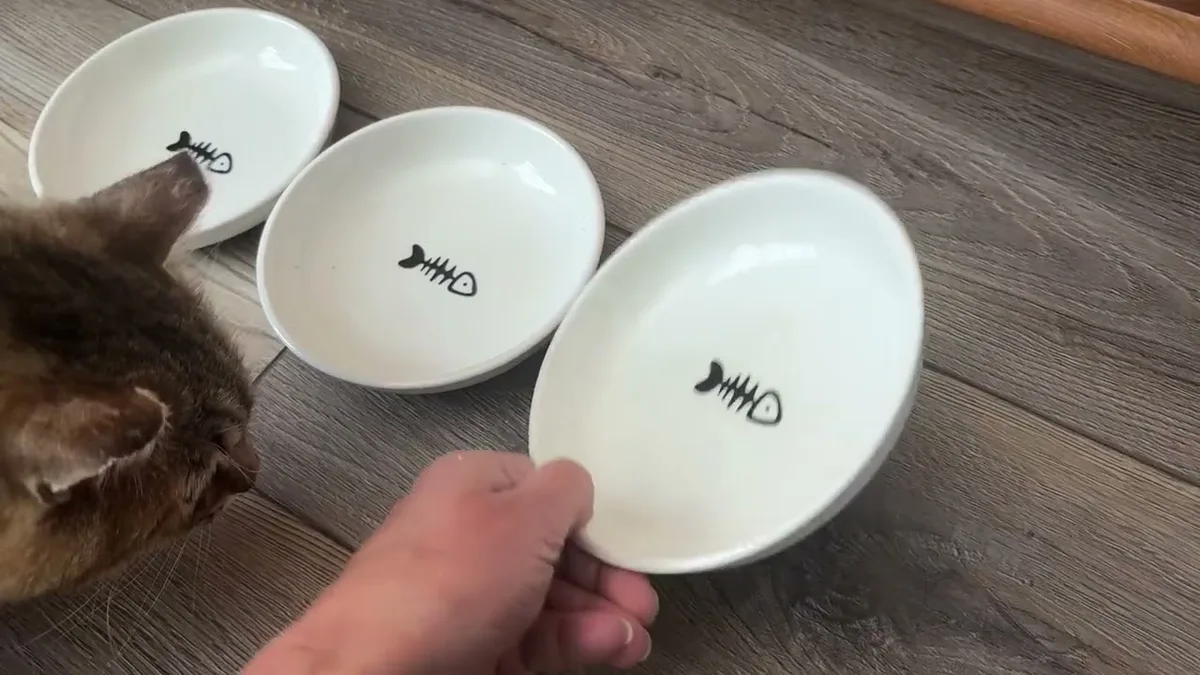
Your cat's bowl may be causing the problem without you realizing it. Many standard cat bowls are too deep or narrow. They force your cat's whiskers to bend sharply against the sides every time she dips her head.
Here's what to check.
Depth. A bowl should be shallow enough that your cat's whiskers don't touch the sides. Aim for less than 2 inches deep.
Material. Plastic bowls can trap smells and cause chin acne. Stainless steel or ceramic is better. Ceramic can be cleaned easily and stays odor-free.
Width. A wide bowl (at least 6 inches across) lets your cat eat without crowding her whiskers.
Shape. Flared bowls are better than straight-sided ones. They allow whiskers to rest outside the bowl.
A quick test: set a flat plate on the floor and put her food on it. If she stops scratching and eats comfortably, the bowl was the issue. Many cat owners find that switching to a shallow, wide bowl fixes whisker stress overnight.
Step 3: Check the Feeding Area – Location, Schedule, and Other Pets
Even with the perfect bowl, your cat may scratch if she feels vulnerable or rushed while eating. Cats are wired to eat in safe, low-traffic spots. A bowl placed against a wall or in a busy hallway can make her want to "cover" her food out of anxiety.
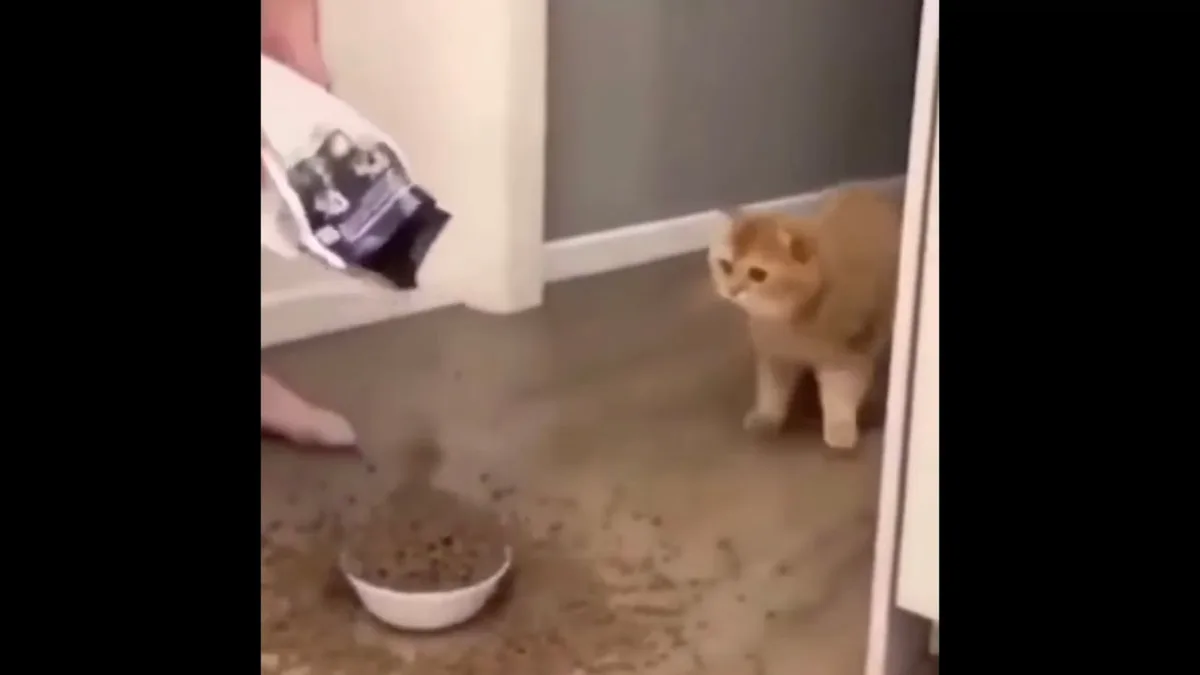
Look at these factors.
Location near walls or corners. Cats prefer to have a clear view while eating. A bowl pushed against a wall forces them to turn their backs on the room. Move it 12 to 18 inches away from the wall.
Multi-cat households. If other cats are nearby, your cat may scratch to hide her food from potential "thieves." Separate feeding stations by at least 5 feet, or feed in different rooms.
Feeding schedule. Free feeding (leaving food out all day) gives your cat a reason to cache. Leftover kibble looks like a surplus worth hiding. Switch to two measured meals per day and remove uneaten food after 30 minutes.
Bowl elevation. Some cats eat better from a slightly raised bowl, especially older cats. Try a low platform or a raised feeder if your cat seems hesitant.
If your cat still scratches after addressing these three areas, you may be dealing with a food quality issue. Move on to testing freshness and temperature. According to the American Association of Feline Practitioners, most feeding behavior problems resolve when owners correct just one or two of these environmental factors.
Step 4: Test the Food Itself – Freshness, Temperature, and Brand Changes
If the bowl and the feeding area both seem fine, the problem likely lies in the food. Cats rely heavily on smell and texture when deciding if something is worth eating. Stale kibble, cold, wet food, or a sudden brand switch can trigger that scratching behavior.
Try these food-related checks.
Check freshness. Dry food goes rancid faster than you'd think. Once opened, kibble stays fresh for about 4 to 6 weeks in a sealed container. Throw away any bag opened longer than that. Wet food left in the bowl for more than an hour starts to dry out and lose its appeal.
Check temperature. Cold, wet food straight from the fridge has less aroma. Most cats prefer it at room temperature or slightly warm. Add a splash of warm water and stir. This releases the scent and makes the food more inviting.
Check the protein source. Some cats develop sensitivities or just get bored with the same flavor. If your cat scratches at chicken-based food but eats fish-based food eagerly, try a rotation. Our guide on picky eaters and dry food covers which proteins tend to work best.
Consider a gradual transition. Switching brands or formulas too quickly can cause upset stomachs and food aversion. Mix 25% new food with 75% old food for three days. Then increase to 50/50 for another three days. A sudden switch often triggers scratching and refusal.
If your cat scratches after sniffing the bowl but walks away, the food is the most likely culprit. Per research from the University of California, Davis School of Veterinary Medicine, food temperature and freshness are among the most overlooked causes of food-related stress in domestic cats.
The Decision Tree: Match Your Cat's Exact Signs to the Right Fix
You've now gathered all the clues. Use this simple decision tree to land on the right solution.
Start at the top and follow the branch that matches your cat.
Does she scratch AFTER eating? Yes → Feed smaller, measured meals. Remove uneaten food after 30 minutes. Consider portion sizes by weight . No → Go to next question.
Does she scratch BEFORE or DURING eating?
Yes → Inspect the bowl. Is it deeper than 2 inches? Are the sides straight?
Try a flat plate or a wide, shallow bowl.
No → Go to next question.
- Does she sniff the food and scratch without eating?
Yes → Check freshness and temperature. Warm, wet food. Try a new protein.
Follow slow transition tips.
No → Go to next question.
Does she scratch in a multi-cat home? Yes → Separate feeding stations by at least 5 feet. Feed in different rooms if possible. No → Check location near walls or high traffic. Move the bowl to a quiet, open spot.
Still scratching after all these changes? Move to the next section about deeper issues.
This workflow is designed to eliminate the most common causes first. Most cats respond to just one or two adjustments. Keep a log of what you change and note the behavior for three days per change.
Common Mistakes That Make the Scratching Worse
Some well-meaning fixes actually reinforce the behavior. Avoid these common errors.
Switching food too often. Jumping from brand to brand every few days confuses your cat and increases scratching. Stick with one change for at least a week.
Using scented dish soap on bowls. Strong citrus or floral smells linger on plastic and ceramic. Cats detest these scents near their food. Wash bowls with hot water and mild, unscented soap only.
Leaving wet food out all day. This encourages caching because leftovers pile up. Wet food should be removed within 30 to 60 minutes.
Moving the bowl constantly. If you keep shifting the feeding station, your cat may scratch to "mark" or reclaim the spot. Pick a location and keep it consistent.
Ignoring whisker stress because the bowl looks deep enough. Remember that whisker length varies. A bowl that works for one cat may still be too narrow for another. The flat plate test is the only way to be sure.
One more mistake: punishing the scratching. Never yell at or spray your cat for this behavior. It's an instinctual response.
Punishment increases anxiety, which often makes the scratching worse.
When a Flat Plate or Shallow Tray Solves the Problem
This is the single most effective test you can run. It costs nothing and gives you an answer in one meal.
Take a flat dinner plate or a shallow tray (a sheet pan works well). Place her regular food on it. No deep sides.
No narrow walls. Just food on a flat surface.
Watch what happens.
If she eats without scratching, the bowl was the problem. Whisker stress was causing the behavior. Permanently switch to a flat plate, a bowl less than 1.5 inches deep, or a specially designed whisker-friendly bowl.
If she still scratches, move on to the other causes we covered. The plate eliminates bowl discomfort as a variable.
Many cat owners we've spoken with report immediate results with this test. Their cats go from frantic scratching to calm eating within seconds. A flat plate is also easier to clean and less likely to trap bacteria.
Just make sure the plate is heavy enough not to slide around. Ceramic or stoneware plates work best.
What to Do If Nothing Seems to Help (When to See a Vet)
You've adjusted the bowl, the location, the food, and the schedule. Your cat still scratches around her food. What now?
It's time to consider a medical cause.
Dental pain. A sore tooth or gum infection can make eating uncomfortable. Your cat may scratch at the bowl because she associates it with pain. Look for drooling, pawing at the mouth, or a sudden preference for soft food. A vet checkup can rule this out.
Nausea or digestive issues. Cats with chronic nausea sometimes scratch at food bowls. They feel sick and want to bury the food to avoid the smell. Vomiting, diarrhea, or reduced appetite are signs.
Arthritis or mobility problems. Older cats may find it painful to bend down to a floor-level bowl. They scratch because they can't get comfortable. A raised feeder can help, but a vet should assess joint health.
Cognitive decline. Senior cats (15 years and older) can develop feline cognitive dysfunction. They may forget that the bowl contains food and scratch out of confusion. This requires a vet's diagnosis.
Compulsive behavior. In rare cases, scratching becomes a repetitive habit even after the original cause is gone. A veterinary behaviorist can help break the cycle.
If your cat has lost weight, stopped eating, or shows other signs of illness, see your vet promptly. Most scratching is harmless. But when combined with other symptoms, it can point to something more serious.
For wound care or injuries from scratching too hard, check our wound care guide for cats.
Quick Answers to Follow-Up Questions (How Long to Test, What to Watch For)
You've made a change. Now you wait. But how long should you test before deciding it worked?
Test each change for at least three full days. Some cats adjust quickly. Others need a week. If you switch to a flat plate and the scratching stops on day one, you have your answer.
If it continues, give it a few more days before trying the next fix.
What to watch for. Look for a clear decrease in the scratching. A single scratch here and there is fine. Consistent pawing at the floor after every meal means the cause is still there.
Track these signs. Note if your cat eats more willingly. Watch her body language around the bowl. Relaxed ears and a calm tail mean she's comfortable.
Hiding, hissing, or rushing through meals means stress remains.
One test at a time. Change only one variable per week. If you change the bowl and the food on the same day, you won't know which one worked. Patience pays off here.
When to call it fixed. When your cat eats her full portion without scratching, you're done. Keep the new setup consistent. Most cats settle into the routine within two weeks of the final change.
Your Personalized Action Plan: One Change at a Time
You now have everything you need to solve this. Here is your step-by-step action plan. Follow it in order and stop when the scratching stops.
Week 1: Test the bowl. Switch to a flat plate or a wide, shallow bowl (less than 2 inches deep). Use stainless steel or ceramic. Observe for three days.
If scratching stops, you're done.
Week 2: Adjust the location. Move the bowl 12 to 18 inches away from any wall. Put it in a quiet, low-traffic area. If you have multiple cats, separate feeding stations by at least 5 feet.
Observe for three days.
Week 3: Check the food. Switch to scheduled meals. Measure portions. Remove uneaten food after 30 minutes.
Warm wet food slightly. Try a different protein if your cat seems bored. Observe for three days.
Week 4: See the vet. If all the above failed, schedule a veterinary checkup. Ask about dental pain, nausea, arthritis, or cognitive issues.
Stick to this order. Most cats respond by week 2. By the end of this plan, you'll know exactly what your cat was trying to tell you.
And she'll finally eat in peace.