
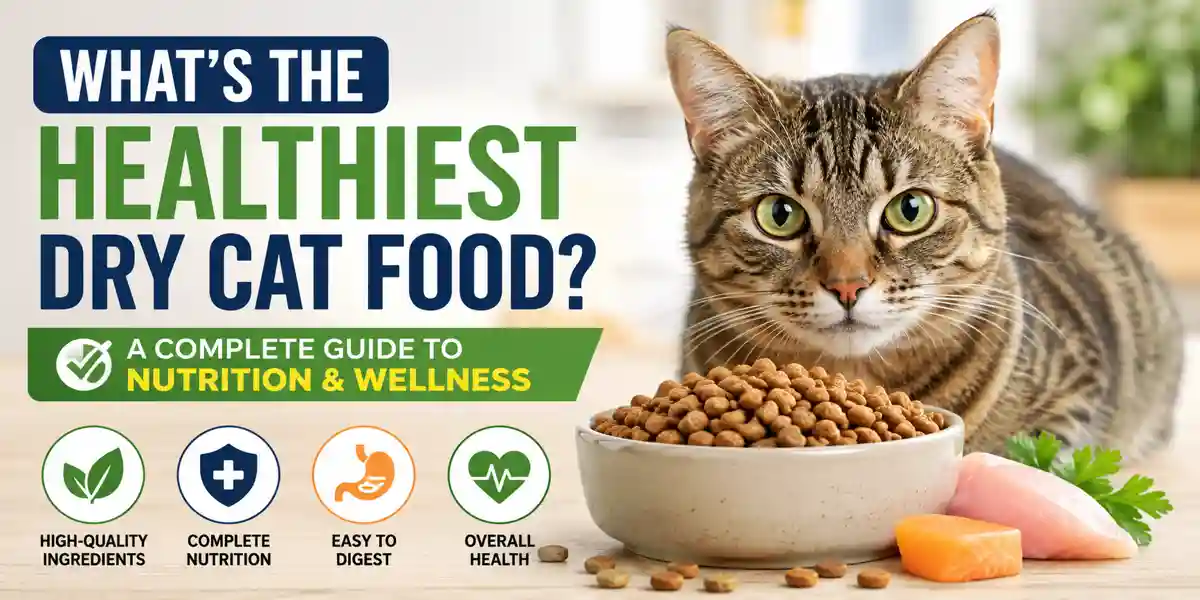
What’s the Healthiest Dry Cat Food (2026) — Explained Simply
You’re asking a fair question, but there’s no single right answer. The healthiest dry cat food depends entirely on your cat’s age, health status, and specific nutritional needs. What’s perfect for a young, active cat could be harmful for a senior with kidney issues.
As of 2026, the AAFCO nutrient profiles set the baseline for complete and balanced cat food in the United States. But meeting those minimums doesn’t automatically make a food healthy. The real answer involves understanding protein sources, carbohydrate levels, moisture content, and how those factors interact with your cat’s unique biology.
Let’s walk through what actually matters.
Quick Answer
The healthiest dry cat food is high in animal protein and low in carbohydrates. Look for a named meat or poultry meal as the first ingredient. Aim for crude protein above 40% on a dry matter basis.
Keep carbohydrates under 15% dry matter. Avoid foods with artificial colors, preservatives, or unnamed by-products.
Why This Question Is Harder Than It Sounds
Dry food is convenient. It’s shelf-stable, easy to portion, and doesn’t require refrigeration. That’s why so many cat owners reach for a bag of kibble and call it done.
But here’s the uncomfortable truth: cats are obligate carnivores. Their bodies evolved to get moisture and protein from prey, not from a bowl of crunchy pellets.
The problem with dry food starts with its fundamental design. Kibble has to be extruded at high heat and pressure to hold its shape. That process requires starches and carbohydrates as binding agents.
Even the best dry cat foods on the market still contain 10 to 20 percent carbohydrates on a dry matter basis. A mouse, which is what a cat’s digestive system is built for, contains less than 2 percent carbohydrates.
That mismatch matters. Chronic high-carbohydrate intake is linked to obesity, diabetes, and inflammatory conditions in cats. The Cornell University College of Veterinary Medicine has documented rising rates of feline diabetes, with diet being a significant contributing factor.
So when someone asks what’s the healthiest dry cat food, what they’re really asking is: which bag of kibble does the least damage while still being practical? That’s a different question, and it deserves an honest answer.
Why “Healthy” Means Different Things for Different Cats
A food that’s ideal for a 7-pound indoor cat with a sensitive stomach might be terrible for a 14-pound outdoor tom with kidney concerns. This is where most generic advice falls apart.
Consider protein requirements. Kittens need higher protein and fat for growth. Adult maintenance cats need decent protein with moderate fat. See related: How many calories are in canned cat food?
Senior cats often need lower phosphorus and controlled protein to protect aging kidneys. Cats with hyperthyroidism burn through calories fast and need energy-dense food. Overweight indoor cats need a lower calorie density with higher fiber.
I’ve seen owners buy a premium grain-free food because it sounded healthy, only to discover their cat’s urinary pH shifted and crystals formed. I’ve also seen diabetic cats do well on higher protein kibble, while others on the same food developed pancreatitis.
The point is clear: there is no universal healthiest dry cat food. There is only the healthiest dry cat food for your specific cat.
The Core Facts Every Cat Owner Needs to Know
Before you can evaluate any bag of kibble, you need to understand what your cat actually requires biologically. This isn’t complicated, but most labels are designed to confuse you.
What a Cat’s Biology Actually Requires
Cats need specific nutrients that they cannot synthesize on their own. These include:
- Taurine, an essential amino acid for heart and eye health. Dry food must be supplemented because the extrusion process destroys natural taurine.
- Arginine, another essential amino acid. Deficiency causes ammonia toxicity rapidly.
- Arachidonic acid is a fatty acid that cats cannot produce from plant sources.
- Vitamin A: Cats cannot convert beta-carotene from plants into usable vitamin A.
- Niacin requires preformed niacin, not tryptophan conversion.
All quality dry cat foods supplement these. The issue is whether the protein sources are primarily animal-based or plant-based. A cat’s pancreas produces specific enzymes to break down animal protein efficiently.
Plant proteins like corn gluten meal or soybean meal are harder for them to digest and provide less usable amino acid profiles. How to make cat food from scratch.
Per AAFCO standards, an adult cat food must contain at least 26% crude protein on an as-fed basis. But as-fed numbers include moisture. Real minimums for dry matter are higher.
Most veterinary nutritionists recommend 35 to 45 percent protein on a dry matter basis for healthy adult cats.
The Guaranteed Analysis: What Those Numbers Really Mean
Every bag of cat food has a guaranteed analysis panel. It lists minimum crude protein, minimum crude fat, maximum crude fiber, and maximum moisture. Here’s what those numbers actually tell you and what they don’t.
| Nutrient | What It Means | What It Doesn’t Tell You |
|---|---|---|
| Crude Protein | Minimum percentage of protein | Protein source quality or digestibility |
| Crude Fat | Minimum percentage of fat | Type of fat or fatty acid profile |
| Crude Fiber | Maximum percentage of fiber | Fiber source or type (soluble vs insoluble) |
| Moisture | Maximum water content | Actual moisture level (often lower than max) |
The guaranteed analysis is a legal minimum and maximum. A food can exceed reported minimums significantly. The only way to get exact numbers is to call the manufacturer or check their website for detailed nutrient profiles.
Here’s the trick most people miss: the guaranteed analysis is reported on an as-fed basis, which includes moisture. Dry matter basis removes moisture to give a true comparison between foods. To calculate dry matter:
- Subtract the moisture percentage from 100 to get the dry matter percentage.
- Divide the nutrient percentage by the dry matter percentage.
- Multiply by 100.
For example, a food with 10% moisture and 40% protein has 90% dry matter. The dry matter protein is 40 ÷ 90 × 100 = 44.4%.
Most premium dry foods have moisture around 6 to 10 percent. Cheaper foods often run higher, making the protein percentage look lower than it actually is compared to dry matter.
AAFCO Feeding Trials vs. Nutrient Profiles
This distinction matters more than most owners realize.
AAFCO Nutrient Profiles are a set of minimum and maximum nutrient levels developed by the Association of American Feed Control Officials. A manufacturer can formulate a food to meet these profiles and slap a “complete and balanced” statement on the bag without ever feeding it to a single cat. That’s legal.
AAFCO Feeding Trials are actual feeding tests where the food is given to cats under controlled conditions for six months or longer. The food must demonstrate that cats maintain health, body weight, and normal blood values. This is a higher standard.
A WSAVA guideline recommends feeding trials as the gold standard. In practice, many boutique and premium brands use nutrient profiles only because feeding trials are expensive and time-consuming. Major multinational brands like Purina, Hill’s, and Royal Canin typically conduct feeding trials.
Which is better for your cat? Feeding trials give more confidence that the food works in real cats. But a well-formulated food meeting nutrient profiles can still be excellent if the manufacturer is transparent about their formulation process.
Look for a statement like: “Animal feeding tests using AAFCO procedures substantiate that [product name] provides complete and balanced nutrition.” That’s a feeding trial statement. A “formulated to meet” statement is for nutrient profiles only.
The Biggest Risk Factors in Dry Food
If you’re feeding any dry food, you need to understand what you’re trading off. Convenience comes with real biological trade-offs. Let’s look at the three biggest ones.
Carbohydrate Overload and the Diabetes-Obesity Link
Cats have no dietary requirement for carbohydrates. Their liver can generate glucose from protein and fat as needed. In the wild, a cat’s diet contains roughly 2 to 5 percent carbohydrates.
Most dry cat foods contain 15 to 30 percent carbohydrates on a dry matter basis. Some cheaper brands push 40 percent or higher. That’s 8 to 20 times what a cat’s body is designed to handle.
The metabolic consequence is significant. High-carbohydrate diets spike blood glucose and insulin. Over time, this can lead to insulin resistance and ultimately diabetes.
The Journal of Feline Medicine and Surgery published research showing that carbohydrate restriction improves glycemic control in diabetic cats. Some cats even go into remission on low-carbohydrate diets.
Obesity is the other side of the same coin. Cats evolved to eat multiple small meals of lean protein throughout the day. Dry food is calorie-dense, highly palatable, and often left out for free-feeding.
That combination is a recipe for weight gain. The Association for Pet Obesity Prevention reports that roughly 60 percent of domestic cats are overweight or obese.
If your cat is already overweight, consider a diet specifically designed for weight management. The right approach makes a real difference for indoor cats that don’t get enough exercise.
Chronic Dehydration and Urinary Tract Problems.
This is the biggest hidden risk with dry food. A typical dry kibble contains 6 to 10 percent moisture. A mouse or a can of wet food contains 70 to 80 percent moisture.
Cats have a low thirst drive because their evolutionary history didn’t require them to drink much water separately.
When a cat eats dry food exclusively, they start in a chronic state of mild dehydration. The kidneys concentrate urine to conserve water. Concentrated urine means higher mineral concentrations, which raises the risk of struvite crystals, calcium oxalate stones, and feline lower urinary tract disease.
A study published in the Journal of the American Veterinary Medical Association found that cats eating dry food had significantly higher urine specific gravity than cats eating wet food. That’s a measure of urine concentration. Higher numbers mean more concentrated urine.
If your cat has had a urinary blockage or crystals, dry food is genuinely risky. A diet specifically designed for urinary health is often recommended. But even for healthy cats, chronic dehydration stresses the kidneys over the years.
It’s a slow-moving problem that doesn’t show symptoms until it’s advanced.
The simple fix is to add moisture. Mix wet food into the diet. Add water or broth to kibble.
Use a cat water fountain. Every extra milliliter of water your cat takes in reduces urinary risk.
Grain-Free Diets and the FDA’s DCM Investigation
In 2018, the FDA began investigating a link between grain-free diets and dilated cardiomyopathy in dogs. Cats were also affected, though the connection is less clear.
Grain-free diets replace grains like corn, wheat, and rice with legumes like peas, lentils, and chickpeas. These ingredients are high in protein and fiber but also contain compounds that may interfere with taurine absorption. Taurine deficiency causes DCM, a potentially fatal heart condition.
The FDA’s investigation found that over 90 percent of reported DCM cases involved grain-free diets. As of 2026, the exact mechanism is still being studied. It may be a taurine absorption issue, an amino acid imbalance, or something else entirely.
What does this mean for your cat? For a healthy cat with no known heart issues, a grain-free diet is likely fine. But avoid grain-free diets that rely heavily on legume ingredients like pea protein or lentil flour.
Look for brands that use named meats and animal-based proteins as the primary source, with minimal legume content.
If your cat has a heart murmur or known heart disease, stick with grain-inclusive diets. The risk is small but real, and a grain-free diet offers no proven benefit for most cats.
The bottom line: grain-free doesn’t automatically mean healthier. It’s a marketing term, not a nutritional claim. Focus on protein source and carbohydrate levels instead. Best cat food for older cats that vomit.
Why Kibble Doesn’t Clean Teeth
You’ve seen the claim on bags: “helps reduce plaque and tartar.” It’s one of the most persistent myths in cat nutrition.
The idea is that kibble’s crunchy texture scrapes plaque off teeth as the cat chews. Here’s the problem: cats don’t chew their food. They swallow kibble whole or break it with their molars in a single crunch.
The kibble shatters and is swallowed. There’s minimal mechanical abrasion on tooth surfaces.
Research published in the Journal of Veterinary Dentistry found that kibble had no significant dental cleaning effect compared to wet food. In fact, some studies suggest that high-carbohydrate kibble may increase dental disease by leaving fermentable carbohydrate residue on teeth.
The only truly effective dental food uses a specific fiber matrix that forces the cat to bite through the kibble, creating a scrubbing action. Those are prescription dental diets, not standard over-the-counter kibble.
If you’re using dry food for dental health, you’re getting minimal benefit. Brush your cat’s teeth, use dental treats with proven efficacy, or use a water additive. Those work better than kibble ever will.
How to Read a Dry Food Label Like a Veterinary Nutritionist
The front of the bag is marketing. The back of the bag is where the truth lives. Here’s how to decode it.
The Ingredient List: What to Look For and What to Ignore
Ingredients are listed by weight. The first ingredient is the heaviest. This sounds straightforward, but manufacturers play games here.
Good signs:
- A named animal protein as the first ingredient (chicken, chicken meal, salmon, turkey meal)
- Animal protein or meal in the top three ingredients
- Named fat sources (chicken fat, salmon oil)
- Whole meats or meals as the primary protein source
- Limited ingredient lists for sensitive cats
Red flags:
- Corn, wheat, or soy as the first or second ingredient
- By-product meal without named species (poultry by-product meal vs chicken by-product meal)
- Artificial colors (Blue 2, Red 40, Yellow 5)
- Artificial preservatives (BHA, BHT, ethoxyquin)
- Multiple grain fractions that split ingredients (corn, corn gluten meal, corn bran, these are all corn but listed separately)
- Sugar or sweeteners (corn syrup, sucrose, caramel)
The by-product distinction: By-products can be nutritious. Chicken by-product meal includes organ meats and bones, which contain nutrients not found in muscle meat. The issue is when the source is unnamed.
“Poultry by-product meal” could include anything from chickens to turkeys to ducks. Named by-product meal is better.
Calculating Carbohydrates on a Dry Matter Basis
Pet food labels don’t list carbohydrate content. You have to calculate it. Here’s the formula:
100, (crude protein + crude fat + crude fiber + moisture + ash) = estimated carbohydrates
Ash is rarely listed. Use 6 to 8 percent as a reasonable estimate for dry food. If the food lists minerals, add those too.
Example calculation:
- Crude protein: 40%
- Crude fat: 18%
- Crude fiber: 4%
- Moisture: 10%
- Ash (estimated): 7%
Total = 79%
Estimated carbs = 100, 79 = 21% as-fed
Convert to dry matter: 21 ÷ 90 × 100 = 23.3% dry matter
For healthy cats, aim for under 20% dry matter carbohydrates. Under 15% is excellent. Above 25% is concerning.
Many over-the-counter foods push 30 to 40 percent.
Spotting Marketing Tricks
“Human-grade” means nothing legally. No federal standard defines this term for pet food. Some manufacturers use it to describe ingredients that meet USDA standards for human consumption, but the FDA doesn’t regulate the claim.
“Natural” means the ingredients haven’t been chemically altered. It has nothing to do with nutritional quality. Synthetic vitamins are safe and necessary.
A natural food without taurine supplementation would kill your cat.
“Premium” is a marketing word with no regulatory definition. Any manufacturer can call their food premium.
“Holistic” has no legal meaning in pet food. It’s a trendy word.
“Grain-free” means what it says, but carries the DCM risk mentioned earlier. It’s not automatically better.
“No fillers” is meaningless. There’s no legal definition of filler. Companies use this to imply other foods contain junk, but corn and wheat are actually digestible carbohydrate sources, not indigestible fillers.
The safest approach: ignore the front of the bag entirely. Read the guaranteed analysis and ingredient list. Calculate carbohydrates.
Check for AAFCO feeding trial statements. If the manufacturer provides full nutrient profiles on their website, that’s a good sign they’re transparent about what’s in the food.
Safe Practices for Choosing and Feeding Dry Food
Once you understand the numbers, you need to apply them to your cat’s specific situation. Here’s how to make a safe choice and feed it properly.
Matching the Food to Your Cat’s Life Stage and Health Status
Kittens (under 1 year): Need higher protein and fat for growth. Look for foods with at least 35% protein and 20% fat as-fed. DHA and calcium-phosphorus balance are critical for bone and brain development.
Specifically formulated kitten food is safer than all-life-stages food.
Adult cats (1 to 7 years): Maintenance needs vary by activity level. Indoor cats need lower calorie density. Outdoor cats can handle higher fat.
Protein should stay above 35% dry matter. Fat between 15 and 20% dry matter is typical for indoor cats.
Senior cats (7+ years): Kidney function declines with age. Lower phosphorus is important. Look for phosphorus under 1.0% dry matter.
Protein should not be restricted unless a veterinarian diagnoses kidney disease. Cats lose muscle mass as they age, so adequate protein prevents sarcopenia.
Cats with health conditions:
- Kidney disease: Low phosphorus, controlled protein, wet food strongly preferred. We’ve covered the specific nutritional needs for older cats who vomit in a separate guide.
- Diabetes: High protein, low carbohydrate (under 10% dry matter). Canned food is usually better.
- Hyperthyroidism: Energy-dense food with controlled iodine. Prescription diets exist.
- Urinary issues: Controlled magnesium and pH. A diet designed for urinary tract health is your best bet. These are often prescribed.
If your cat has a diagnosed condition, work with your veterinarian. Prescription diets exist for a reason and are formulated with specific nutrient profiles that over-the-counter foods cannot match.
Transitioning Food Safely
Switching food abruptly causes vomiting and diarrhea. Cats have sensitive digestive systems. The transition should take 7 to 10 days.
- Days 1 to 3: 75% old food, 25% new food
- Days 4 to 6: 50% old food, 50% new food
- Days 7 to 9: 25% old food, 75% new food
- Day 10: 100% new food
If your cat has a sensitive stomach, extend the transition to 14 days. Add a probiotic during the transition to support gut health.
Monitor stool quality throughout. If diarrhea develops, slow down the transition. Go back to the previous ratio for a few days before increasing again.
Proper Storage to Avoid Spoilage and Mycotoxins
Dry food is shelf-stable until opened. Once the bag is open, exposure to air, humidity, and heat degrades the fats and creates rancidity. Rancid fats cause gastrointestinal upset and may contribute to chronic inflammation.
Storage rules:
- Keep dry food in its original bag inside an airtight container. The bag has preservatives and fats that migrate to the inner surface. Transferring to a bin without the bag exposes the food to oxidation.
- Store in a cool, dry place below 70°F. Avoid garages, laundry rooms, or near ovens.
- Use food within 4 to 6 weeks of opening. Smaller bags are better than large bags for single-cat households.
- Check expiration dates before buying. Don’t buy bags expiring in less than 3 months.
Mycotoxins are toxic compounds produced by mold that can grow on grains during storage. The FDA has limits for aflatoxins in pet food, but recalls still happen. Rotating stock and buying from reputable manufacturers reduces risk.
If the food smells rancid, has visible mold, or your cat refuses to eat it, throw it away. Don’t try to salvage it.
When You Should Absolutely Talk to a Vet First
Some situations make dry food choices more consequential. If your cat falls into any of these categories, consult your veterinarian before switching foods.
Cats With Kidney Disease, Diabetes, or Hyperthyroidism
Chronic kidney disease is progressive and irreversible. Diet is a cornerstone of management. Prescription kidney diets restrict phosphorus, control protein levels, and add omega-3 fatty acids and antioxidants.
A standard dry food, even a premium one, may accelerate disease progression.
That said, some early-stage kidney cats can handle a lower-phosphorus over-the-counter food if phosphorus stays below 0.8% dry matter. Your vet can run blood tests to determine the stage and recommend appropriate phosphorus limits.
Diabetic cats need strict carbohydrate control. Ideally, under 10% dry matter. That’s very low for dry food.
Most dry foods that claim to be low-carb still sit at 12 to 18%. Wet food is almost always better for diabetic cats.
For owners who must feed dry, look for foods with crude protein above 50% dry matter and carbohydrates under 12%. These exist but are expensive. Monitor blood glucose after switching to ensure the diet is working.
Hyperthyroid cats burn calories rapidly. They need energy-dense food with adequate protein. Some prescription diets restrict iodine, which reduces thyroid hormone production.
If your cat has hyperthyroidism, a prescription diet is worth discussing with your vet.
Senior Cats and Kittens: Different Nutritional Rules
Senior cats lose kidney function, muscle mass, and digestive efficiency. They need:
- Adequate protein (not restricted unless kidneys are failing)
- Lower phosphorus
- Digestible fats for energy
- Added joint support (glucosamine, chondroitin, omega-3s)
- Easy-to-chew kibble (smaller pieces or a mix with wet food)
Many senior cat foods are too high in carbohydrates and too low in protein. Read the label carefully. We’ve covered specific recommendations for older cats who vomit in a separate guide.
Kittens need:
- Higher protein (minimum 35% as-fed)
- Higher fat (minimum 20% as-fed)
- Calcium and phosphorus at specific ratios for bone growth
- DHA for brain and eye development
All-life-stages foods can work for kittens, but they’re often too high in calories and calcium for rapid growth. A food specifically formulated for kittens is safer.
Prescription Diets vs. Over-the-Counter Options
Prescription diets are veterinary-exclusive for a reason. They contain precise nutrient modifications that are impossible to achieve with standard food. For example, a prescription kidney diet might have 0.5% phosphorus dry matter.
Most over-the-counter foods run 0.8 to 1.2%.
The tradeoff is cost and availability. Prescription diets are more expensive and require a veterinary visit. For many cats with chronic conditions, the benefits justify the cost.
For healthy cats, they’re unnecessary.
If your cat has a health condition requiring dietary modification, start with the prescription diet. Only consider over-the-counter alternatives if your cat refuses the prescription food or if cost is prohibitive. And even then, work with your vet to find a suitable alternative.
This article is for informational purposes and does not substitute professional veterinary advice. Always consult with a qualified veterinarian for health decisions regarding your cat.
Common Mistakes That Undo All Your Good Intentions
Even with the right bag of food, small feeding mistakes can undermine your efforts. Here are the most common ones I’ve seen in my research.
Free-Feeding a Food That’s Too Calorie-Dense
Dry food is calorie-dense by design. A single cup of premium kibble can contain 400 to 500 calories. For a 10-pound cat with a maintenance requirement of 200 to 250 calories per day, that’s two days of food in one cup.
Free-feeding means leaving food out all day for the cat to eat at will. This works only if the cat self-regulates. Most cats don’t.
They eat because food is available, and that leads to weight gain.
The solution is portion control. Measure food by weight, not volume. A kitchen scale gives accurate portions.
Check the feeding guide on the bag, but reduce by 20 to 30 percent for indoor cats. Adjust based on body condition.
If you must free-feed because of work schedules, use an automatic feeder that dispenses measured portions at set times. This prevents overeating while maintaining convenience.
Relying on Kibble for Dental Health
As we discussed earlier, kibble doesn’t clean teeth effectively. The mechanical abrasion claim is overstated in the research. Cats swallow most kibble whole, and the pieces that are chewed shatter quickly.
If dental health is a concern, use proven methods:
- Daily tooth brushing with pet-safe toothpaste
- Dental treats that carry the Veterinary Oral Health Council seal
- Water additives with chlorhexidine or other antimicrobials
- Regular veterinary dental cleanings
Kibble alone will not prevent dental disease. We’ve covered specific dry food options for dental health in a separate guide.
Ignoring Water Intake
Dry food provides minimal moisture. If your cat eats only dry food, they must drink enough water to compensate. Most cats don’t.
The result is chronic dehydration that stresses the kidneys over time.
Simple fixes:
- Place multiple water bowls around the house
- Use a cat water fountain (moving water encourages drinking)
- Add water or unsalted broth to kibble
- Mix wet food into the diet at least once daily
A cat on dry food who drinks water from a bowl will typically take in 50 to 70 milliliters per kilogram of body weight per day. A cat on wet food takes in 80 to 120 milliliters per kilogram. That extra hydration makes a real difference for urinary and kidney health.
Switching Foods Too Fast or Too Often
Cats are creatures of habit. Their gut microbiome adapts to a specific diet. Sudden changes cause digestive upset, including vomiting and diarrhea.
Stick with one food for at least 3 to 4 weeks before evaluating whether it works. Give the cat’s system time to adjust. If you switch foods every few weeks because you’re searching for the perfect one, you’ll create more problems than you solve.
If a food causes persistent digestive issues after 4 weeks, it’s not the right food. But give it a fair trial before deciding.
Feeding Treats and Table Scraps Unwisely
Treats should make up no more than 10 percent of daily calories. Many cat treats are high in carbohydrates and low in protein. Some contain sugar, salt, and artificial flavors.
If you’re feeding a carefully selected dry food, high-carb treats undermine the effort. Choose freeze-dried meat treats or small pieces of cooked chicken instead of commercial treats with fillers.
Table scraps are worse. Cats cannot safely eat onions, garlic, grapes, raisins, chocolate, or raw eggs. Fatty scraps can cause pancreatitis.
Stick with cat-specific treats.
Real Scenarios: What I’ve Seen Work (and Fail)
Real-world examples help illustrate how these principles apply in practice. Here are three scenarios that cover common situations.
The Indoor Cat Who Kept Gaining Weight
A 6-year-old spayed female indoor cat weighed 12 pounds. The ideal weight was 9 pounds. She was eating a popular grain-free dry food, free-fed throughout the day.
The problem: Free-feeding a calorie-dense food with 450 kcal per cup. The cat ate roughly 1.5 cups per day, which is 675 calories. Maintenance requirement for a 9-pound cat is about 180 to 200 calories per day.
The fix: Switch to measured meals of a lower-calorie food at 350 kcal per cup. Feed 0.5 cups per day, split into two meals. Add wet food for moisture and satiety.
Result: Lost 2 pounds in 3 months. Energy levels improved. Coat condition stayed good.
Lesson: Portion control is everything. Free-feeding works for some cats, but for most indoor cats, it’s a fast track to obesity.
The Senior Cat With Early Kidney Changes
An 11-year-old male neutered cat had bloodwork showing early kidney changes. Creatinine was mildly elevated. The owner was feeding a high-protein premium dry food.
The problem: The food had 1.1% phosphorus dry matter. For early kidney disease, phosphorus should be under 0.8% dry matter.
The fix: Switch to a lower-phosphorus food with 0.7% phosphorus. Add a phosphorus binder as prescribed. Incorporate wet food to increase moisture intake.
Result: Kidney values stabilized over 6 months. The cat maintained body weight and appetite.
Lesson: Kidney disease management starts with diet. Early intervention with appropriate phosphorus levels can slow disease progression.
The Picky Eater Who Needed a Different Kibble Shape
A 3-year-old male cat refused to eat any dry food with large kibble. He would sniff it and walk away. The owner was buying a premium food with large, chunky kibble.
The problem: The cat preferred smaller kibble pieces that were easier to pick up and swallow.
The fix: Switch to a food with smaller kibble size. The manufacturer offered the same formulation in a smaller kibble for small breeds.
Result: The cat ate willingly. Digestibility was the same.
Lesson: Kibble size and shape matter for palatability. If your cat refuses a food, try a different shape or size before giving up on the formulation.
Decision Guide: How to Pick the Healthiest Option for Your Cat
Here’s a practical process you can follow when standing in the pet food aisle or shopping online.
A Simple Checklist You Can Use in the Store
- Check the first ingredient. Is it a named animal protein? Chicken, chicken meal, turkey meal, salmon meal, all good. Corn, wheat, or unnamed by-product meal, skip it.
- Calculate crude protein dry matter. Aim for above 40%. Divide the as-fed protein by (100 minus moisture) times 100.
- Estimate carbohydrates. Use the formula: 100 minus (protein + fat + fiber + moisture + ash). Aim for under 20% dry matter. Under 15% is excellent.
- Check for AAFCO feeding trials. Look for the “animal feeding tests” statement. If it says “formulated to meet,” that’s nutrient profiles only.
- Look for guaranteed minimums on taurine, omega-3s, and probiotics. These aren’t required on all labels, but quality foods often include them.
- Check recall history. Look up the manufacturer’s recall record. Frequent recalls are a red flag.
When to Choose High-Protein vs. Lower-Protein vs. Limited-Ingredient
High-protein (45%+ dry matter): Best for active adult cats, kittens, and diabetic cats. Not ideal for cats with kidney disease.
Medium-protein (35 to 45% dry matter): Good for most adult maintenance cats. Balances protein with digestibility.
Lower-protein (under 35% dry matter): Suitable for cats with kidney disease or pancreatitis. Must be supplemented with wet food for adequate nutrition.
Limited-ingredient: Best for cats with suspected food allergies or sensitive stomachs. Contains a single protein source and minimal carbohydrate sources.
The healthiest option for most healthy adult cats is a high-protein, low-carbohydrate food with named animal protein sources and AAFCO feeding trial substantiation. That’s a narrow category, but it exists.
The Role of Wet Food, Toppers, and Rotation Feeding
Dry food alone is never ideal. Adding wet food provides moisture, variety, and different nutrient profiles. A common approach is:
- Morning meal: dry food (portion controlled)
- Evening meal: wet food
- Optional midday snack: freeze-dried treats or wet food topper
This gives the convenience of dry food for one meal while adding hydration benefits from wet food.
If your cat tolerates variety, rotating between two or three different foods prevents taste fatigue and ensures a broader nutrient intake. Rotate slowly and monitor for digestive issues.
Final Verdict — What the Research Really Says
The honest answer to “what’s the healthiest dry cat food” is this: there isn’t one universal answer. But there are clear principles that separate better options from worse ones.
The healthiest dry cat food for your cat:
- Has a named animal protein as the first ingredient
- Provides at least 40% protein on a dry matter basis
- Contains less than 15% carbohydrates on a dry matter basis
- Is formulated for your cat’s life stage (kitten, adult, senior)
- Has been tested in AAFCO feeding trials
- Comes from a manufacturer with a good recall history and transparent formulation
The healthiest dry cat food in general: Higher protein, lower carbohydrate options from manufacturers that conduct feeding trials. These tend to cost more but offer better nutritional profiles.
What you should pair with it: Wet food at least once daily. Extra water or broth. Regular veterinary checkups to monitor weight, kidney function, and urinary health.
Dry food is a tool, not a solution. Used carefully and paired with wet food and plenty of water, it can work as part of a balanced diet. Used exclusively and carelessly, it carries real health risks.
The choice is yours.
Quick Reference Summary for Your Next Shopping Trip
| Criteria | What to Look For | What to Avoid |
|---|---|---|
| First ingredient | Named meat meal (chicken meal, salmon meal) | Corn, wheat, soy, and unnamed by-products |
| Protein (dry matter) | 40% or higher | Under 30% |
| Carbs (dry matter) | Under 15% | Over 25% |
| AAFCO statement | Animal feeding tests | Formulated to meet only |
| Preservatives | Natural (vitamin E, vitamin C) | BHA, BHT, ethoxyquin |
| Recall history | 0 to 1 recall in 5 years | Frequent or recent recalls |
| Price point | $3 to $6 per pound | Under $1 per pound |
Frequently Asked Questions
Is dry food bad for all cats?
No, but it carries risks. Dry food lacks moisture, which can contribute to urinary and kidney issues over time. It’s also high in carbohydrates, which can lead to obesity and diabetes.
For healthy cats with good water intake, it can work as part of a balanced diet that includes wet food.
What protein percentage should be in healthy dry cat food?
For most adult cats, aim for 40 percent or higher on a dry matter basis. Kittens need around 45 percent. Senior cats without kidney disease also benefit from 40 percent or higher.
Cats with kidney disease need lower protein and phosphorus under veterinary guidance.
Is grain-free dry cat food healthier?
Not necessarily. Grain-free diets replace grains with legumes like peas and lentils, which carry a potential link to dilated cardiomyopathy. For most healthy cats, grain-inclusive diets with named meat proteins are equally healthy and may be safer.
Focus on protein source and carbohydrate levels instead of grain content.
How do I calculate carbs in dry cat food?
Use this formula: 100 minus (crude protein percentage plus crude fat percentage plus crude fiber percentage plus moisture percentage plus estimated ash percentage). Ash is usually 6 to 8 percent for dry food. The result is the estimated carbohydrate percentage.
Convert to dry matter by dividing by (100 minus moisture) and multiplying by 100.
Can I mix wet and dry cat food?
Yes, and it’s often a good idea. Mixing adds moisture to the diet while keeping the convenience of dry food. Use a 50/50 split or adjust based on your cat’s needs.
Reduce the total amount fed to account for the higher calorie density of dry food combined with wet.
What’s the most important thing to look for on a cat food label?
The first ingredient should be a named animal protein. That’s the single most reliable indicator of quality. Next, check the guaranteed analysis for protein percentage.
Finally, look for the AAFCO feeding trial statement. Those three things tell you more than any marketing claim on the front of the bag.
Here are the next 5 H2 sections, picking up exactly where the previous batch ended.
The Bigger Picture: Dry Food in Context
Dry food isn’t inherently evil. It’s just incomplete. Think of it as a tool in your feeding toolkit rather than a complete solution.
The healthiest approach combines dry food with wet food, fresh water, and regular veterinary monitoring. That combination covers moisture needs, provides nutritional variety, and catches problems early.
If you rely solely on dry food, you’re asking your cat’s body to adapt to something it wasn’t designed for. Some cats handle it fine. Others develop problems over the years.
The risk is cumulative and silent until it isn’t.
How to Evaluate a Manufacturer’s Quality and Transparency
A food’s label tells you what’s in the bag. But the manufacturer’s practices tell you how reliable that information is.
What to Look for in a Manufacturer
Transparency around ingredient sourcing. Quality manufacturers name their suppliers and describe their quality control processes. They publish complete nutrient profiles, not just guaranteed analysis minimums.
Board-certified veterinary nutritionists on staff. Companies that employ DACVN or DACVIM nutritionists invest in formulation science. They don’t rely on marketing teams to design diets.
Published feeding trial data. Manufacturers that conduct AAFCO feeding trials often share results or, at a minimum, state it clearly on labels. Those who use only nutrient profiles should be willing to explain their formulation process.
Recall history. Check the FDA’s recall database. A company with multiple recalls for nutritional imbalances or contamination should raise concerns. A company with zero recalls might simply be lucky, but a pattern of recalls is a clear red flag.
Questions to Ask Customer Service
Call the manufacturer and ask:
- “Do you conduct AAFCO feeding trials?”
- “Who formulates your diets? Do you have a board-certified veterinary nutritionist?”
- “Where do you source your protein and carbohydrate ingredients?”
- “Do you test each batch for nutrient levels, mycotoxins, and pathogens?”
If they can’t answer these questions clearly, that’s information in itself.
When Dry Food Is Actually the Wrong Choice
There are situations where dry food should be avoided entirely or used only as a last resort.
Cats With a History of Urinary Blockages
Male cats who have experienced a urethral blockage should not eat dry food exclusively. The concentrated urine that dry food produces raises the risk of crystal formation and re-blockage. These cats need a prescription urinary diet in wet form.
Dry food can be used as a treat but not as a primary diet.
Aggregate veterinary reports indicate that cats switched to wet food after a blockage have significantly lower recurrence rates. The moisture dilutes urine and reduces mineral concentration.
Cats With Chronic Kidney Disease (Stage 2 or Higher)
Once kidney disease progresses beyond the early stages, dry food becomes problematic. The kidneys can no longer concentrate urine effectively. The cat needs the extra moisture from wet food to help flush waste products.
Prescription kidney diets are available in wet form. If your cat refuses wet food, some dry options exist with restricted phosphorus, but they require careful monitoring of hydration status.
Cats With Severe Dental Disease
Cats with painful mouths may avoid dry food because chewing hurts. This leads to malnutrition and weight loss. Wet food or softened dry food is kinder and more practical.
If your cat has lost teeth or has advanced dental disease, switch to wet food or a soft diet. We’ve covered specific options for cats with no teeth in a separate guide.
Cats Who Won’t Drink Enough Water
Some cats naturally drink very little. They rely on food for most of their water intake. For these cats, dry food is a poor match.
They will remain chronically dehydrated, which stresses the kidneys and urinary tract.
Signs of low water intake include: very concentrated urine, infrequent urination, and constipation. If your cat shows these signs, increase wet food and water sources immediately.
The Role of Supplements With Dry Food
Even high-quality dry food may benefit from targeted supplementation. Here’s what research suggests and what to avoid.
Supplements Worth Considering
Omega-3 fatty acids (EPA/DHA). Dry food loses some fatty acid content during extrusion and storage. Adding a fish oil supplement supports skin, coat, joint, and kidney health. Use a product specifically formulated for cats with appropriate dosing.
Probiotics. The extrusion process kills live probiotics in dry food. Some manufacturers add them after extrusion, but survival during storage is questionable. A separate probiotic supplement provides more reliable digestive support.
Digestive enzymes. Cats produce pancreatic enzymes to digest food. Senior cats or those with pancreatic insufficiency may benefit from added enzymes. This should be discussed with a veterinarian. Best wet cat food for kittens.
Supplements to Avoid
Synthetic taurine supplements. Quality dry food already contains adequate taurine. Adding more risks and toxicity is unnecessary. If you’re worried about taurine levels, choose a food with a feeding trial rather than supplementing.
Calcium or phosphorus supplements. These can unbalance the carefully formulated calcium-to-phosphorus ratio in complete diets. Only use under veterinary supervision.
Multivitamins. Complete and balanced dry food already meets all nutritional requirements. Adding a multivitamin creates a risk of fat-soluble vitamin toxicity, especially vitamins A and D.
Maintaining Long-Term Health on Dry Food
If you choose to feed dry food, long-term health depends on consistent monitoring and adjustment.
Regular Veterinary Checkups
Annual or semi-annual bloodwork and urinalysis catch problems early. Key markers to monitor include:
- Creatinine and BUN for kidney function
- Phosphorus for early kidney disease detection
- Glucose and fructosamine for diabetes screening
- Urine specific gravity for hydration status
- Urine pH and sediment for crystal or infection detection
Body Condition Scoring
Learn to assess your cat’s body condition using the 9-point scoring system. A score of 4 or 5 out of 9 is ideal. You should be able to feel ribs with a thin fat layer, see a waist behind the ribs, and feel an abdominal tuck.
If your cat’s body condition score drifts above 6, reduce portions or switch to a lower-calorie food. If it drops below 4, increase portions or add wet food.
Adjusting Portions With Age and Activity
A cat’s energy needs change over time. A 2-year-old active cat needs more calories than an 8-year-old sedentary one. Reassess portions every 6 months and adjust based on body condition, not the bag’s feeding guide.
Indoor cats typically need 20 to 30 percent fewer calories than the bag suggests. Outdoor or active cats may need the recommended amounts or slightly more.
Monitoring for Food Sensitivities
Some cats develop sensitivities to foods they’ve eaten for years. This is not an allergy. It’s a cumulative intolerance that shows up as chronic vomiting, soft stool, skin issues, or excessive grooming.
If your cat develops these symptoms, try a limited-ingredient diet with a novel protein source. Give it 8 to 12 weeks before evaluating. If symptoms resolve, you’ve found the trigger.
Real-World Feeding Strategies That Work
Here are practical approaches that balance dry food’s convenience with health considerations.
The Mix-and-Match Method
Feed dry food in the morning and wet food in the evening. The dry food provides convenience for busy mornings. The wet food adds moisture and variety at night.
Adjust portions based on calorie needs. A typical 10-pound cat on this plan might get 1/4 cup of dry food plus 3 ounces of wet food per day. That’s roughly 200 to 240 calories total.
The Hydrated Kibble Method
Add warm water to dry kibble and let it soak for 5 to 10 minutes before serving. This increases moisture content from 10 percent to roughly 50 percent. It also softens the kibble for easier chewing.
Some cats prefer this texture. Others reject it. Start with a small amount of water and increase gradually.
The Rotation Method
Rotate between two or three different dry foods every few months. This prevents taste fatigue and ensures broader nutrient intake. It also reduces the risk of developing sensitivities to a single protein source.
Rotate slowly over 7 to 10 days each time. Monitor for digestive upset during transitions.
Final Word
The healthiest dry cat food is the one that meets your cat’s individual needs while minimizing the inherent drawbacks of dry food. There’s no magic bag. There’s only careful selection, portion control, hydration management, and regular veterinary oversight.
If you take one thing away from this guide, let it be this: dry food is a convenience, not a complete solution. Pair it with wet food, provide plenty of fresh water, and stay vigilant about your cat’s health. That combination is the closest thing to a universal answer for “what’s the healthiest dry cat food.”
The Cost Factor: Quality vs. Budget
Higher-quality dry foods cost more per pound. Expect to pay $3 to $6 per pound for foods with named meat meals, low carbohydrates, and feeding trial substantiation.
Cheaper foods save money upfront, but can cost more in veterinary bills later. Obesity, diabetes, and urinary disease are expensive to manage.
What About Raw and Freeze-Dried Alternatives
Freeze-dried raw food offers higher protein and lower carbohydrates than most kibble. It also retains more natural enzymes and fatty acids.
The tradeoff is cost and safety. Freeze-dried raw is expensive and requires careful handling to avoid bacterial contamination. It’s an option for owners with the budget and commitment.
The Bottom Line on Prescription Diets
Prescription diets are formulated for specific medical conditions. They are not healthier than over-the-counter food for a healthy cat.
Use them only when your veterinarian diagnoses a condition that requires dietary modification. They are not a general wellness choice. Which Is Better for cats, wet or Dry Food?
How Often Should You Reevaluate Your Cat’s Diet
Reevaluate at least once a year during your cat’s annual veterinary visit. Bloodwork, urinalysis, and body condition scoring guide diet decisions.
Life stage changes also trigger reevaluation. Moving from kitten to adult, adult to senior, or after a new diagnosis all require diet adjustments.
One Last Reminder
The healthiest dry cat food is the one you feed correctly. Measure portions. Add moisture.
Monitor your cat’s health. Adjust as needed.
That’s the real answer. Not a brand name. Not a marketing claim.
Just careful, informed, consistent care.
Our recommended Healthiest Dry Cat Food
I love and you Naked Essentials Dry Cat Food
IAMS Proactive Health Dry Cat Food
ORIJEN Grain Free High Protein Premium Dry Cat Food

One Comment