How to Stop Cat From Running Out the Door
Your cat only needs a half-open door and a second of distraction. The sprint to freedom is one of the most common complaints veterinarians hear from indoor cat owners. If you’re searching for how to stop a cat from running out the door, you already know the panic: arms full of groceries, the door swings open, and suddenly there’s an orange blur heading for the hedge.
The stakes are real. Indoor cats that bolt face traffic, predators, and diseases they wouldn’t encounter otherwise. In our research across veterinary behavior resources, we found that a typical house cat can accelerate to roughly 30 mph in a short sprint.
That means even a two-second lapse gives your cat enough time to clear a driveway and reach the street. As of 2026, microchipping remains the single best safety net, but the real goal is stopping the dash before it happens. That starts with understanding what’s driving the behavior.
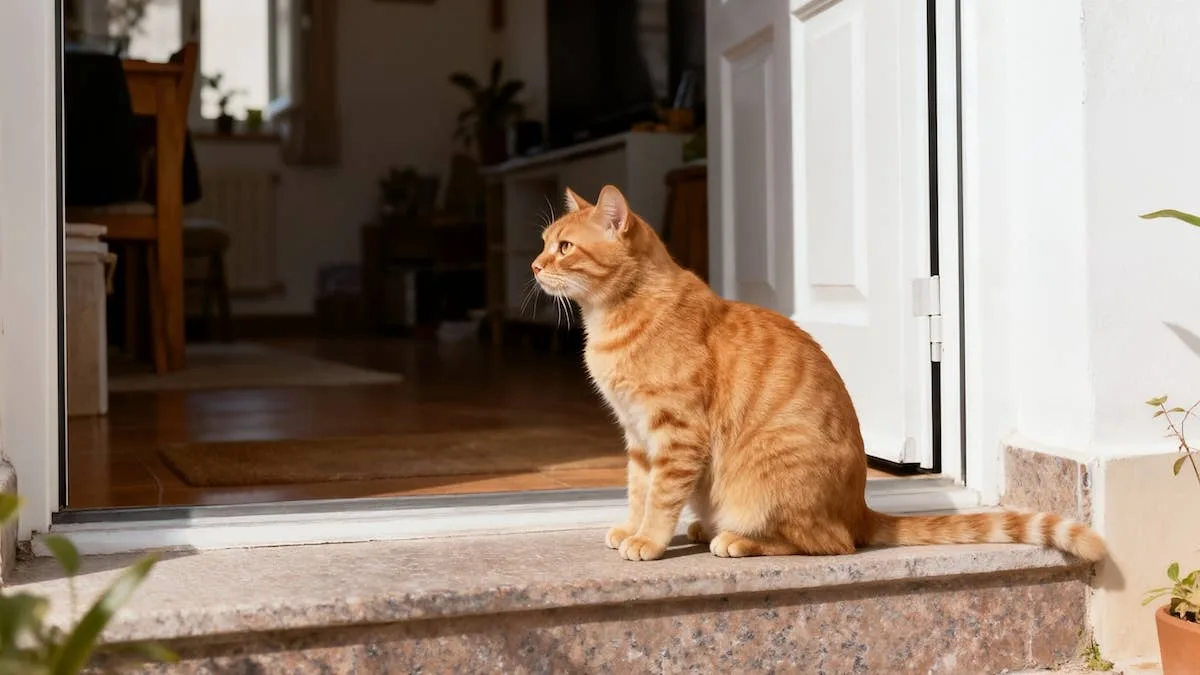
Image source: Web (Bing) / pawnation.com (Web image (fair-use with source credit))
Why Your Cat Bolts — And Why Punishment Makes It Worse
Cats don’t dart through doorways because they’re trying to escape you. They’re acting on deep wiring. In the wild, a cat’s survival depends on investigating new territory, hunting moving prey, and knowing what’s on the other side of every opening.
Your front door is a threshold to a world full of new smells, birds, and interesting sounds. For a curious indoor cat, that world is basically a live nature documentary with no glass.
Three distinct triggers make a cat dart. The first is curiosity. Some cats simply want to see what’s out there, and the door opening is the opportunity.
The second is fear. Loud noises, unfamiliar visitors, or sudden chaos can send a nervous cat running for the perceived safety of an exit. The third is routine.
A cat who occasionally gets to slip out might have learned that the doorway leads to adventure, and the doorbell becomes a signal to stage an escape.
If your instinct is to squirt the cat with water or yell “No!”, stop right there. Punishment doesn’t address the root cause. Worse, it teaches your cat to associate the doorway with stress, which can actually increase the urge to flee.
Feline behavior specialists consistently report that negative reinforcement creates anxiety without reducing the unwanted behavior. Your cat doesn’t connect the spray bottle with “door”, they connect it with “human near the door”.
The good news is that this behavior is trainable. We’ve seen it corrected in almost every household regardless of the cat’s age or personality. The solution is not to convince your cat that the door is boring.
It’s to make staying near the door more rewarding than running through it.
Quick Answer: The 4-Step Framework That Actually Works
Stop your cat from running out the door with four steps.
-
Diagnose the trigger. Know why your cat bolts.
-
Block the behavior. Use physical barriers.
-
Distract with value. Offer better incentives.
-
Train the threshold. Reward calm proximity.
The order matters. Skip diagnosis, and you waste time on the wrong fix.
Step 1: Diagnose Your Cat’s Dash Trigger
Before you buy a single gate or treat, figure out what’s actually setting your cat off. This is the most skipped step, and it’s the reason most DIY fixes fail. You’ll watch your cat’s behavior near the door and look for patterns.
Set up a quick observation this week, and you’ll have your answer.
Here’s what to look for, broken down by trigger type:
The Doorbell Effect
If your cat takes off the moment the bell rings, this is classic classical conditioning. Your cat has learned that the doorbell predicts the door opening, and the door opening predicts freedom. Even if your cat has never successfully escaped, the anticipation alone can trigger the bolt response.
The tell: Your cat is relaxed until the doorbell sounds, then instantly alert and heading for the threshold. You might notice their ears perk up before they move.
The “Hands Full” Fumble
When you’re carrying groceries, packages, or both kids, your attention is elsewhere. Opportunistic dashers wait for exactly that moment. They hang around the door, watch you fumble with keys, and make their move when your hands are full and the door is open.
The tell: Your cat only dashes when you’re distracted. If you approach the door calmly with empty hands, they show little interest.
The Fear Bolt
Loud noises from outside, unfamiliar visitors, or even the vacuum cleaner running near the entryway can send a nervous cat running. This is a fear-based flight response, not curiosity. The cat wants to get away from the stressor, and the doorway just happens to be the exit path.
The tell: Your cat’s body language changes before the dash. Tail low, ears flattened, pupils dilated. They’re not sauntering toward the door.
They’re bolting from something.
The Everyday Escape Artist
Some cats just love the idea of being outside. They’ll sit by the door, wait for any opportunity, and act perfectly calm while doing it. These are persistent, patient cats who have learned that the doorway means adventure.
The tell: Your cat regularly sits near the door, shows interest in it, and attempts to slip out even when you’re not distracted. They’re not scared. They’re curious.
If you’re still unsure which category your cat falls into, keep a simple log for three days. Note the time of day, what was happening right before the dash attempt, and whether the cat seemed curious or frightened. That log will tell you everything you need to know.
Step 2: Immediate Barriers — Physical Fixes That Stop the Dash Today
Once you know the trigger, you need to stop the behavior while you work on long-term training. This is where physical barriers come in. These are quick, practical fixes that prevent the dash from happening, giving you the breathing room to train a better habit.
Here’s the honest breakdown of what works:
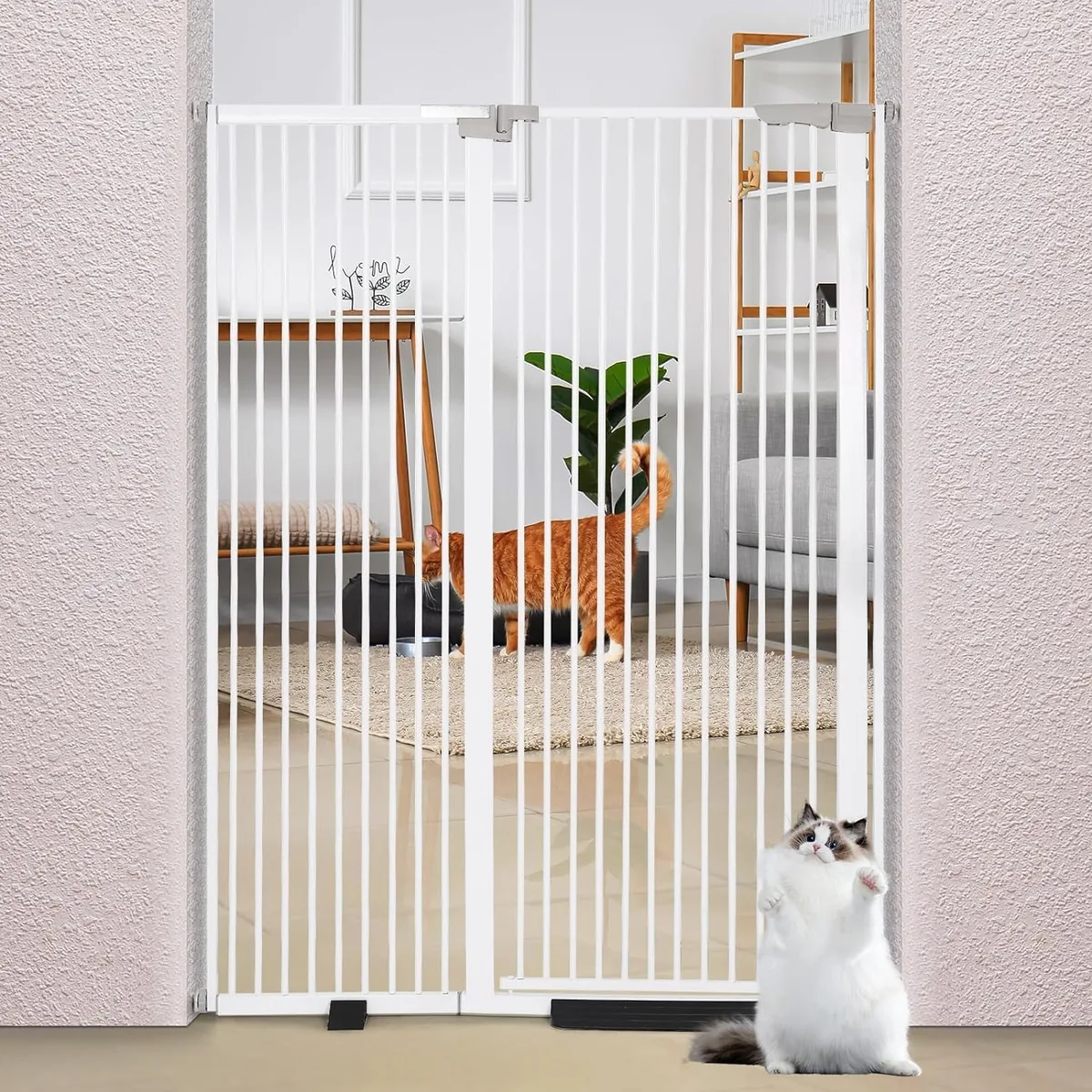
Image source: Web (Bing) / walmart.com (Web image (fair-use with source credit))
Extra-Tall Pet Gates
Standard baby gates are often too low for an athletic cat. Most can clear a 30-inch gate without breaking stride. You need an extra-tall gate, ideally 4 to 5 feet high, with narrow vertical bars.
Pressure-mounted versions cost between $25 and $60 and install in minutes without drilling.
The gate should go a few feet back from the door, not directly in the doorway. That gives you space to enter, close the door, and then lower the gate. Your cat can still see the door, but they can’t reach it.
Motion-Activated Air Canisters
These work like a sudden, harmless burst of air that surprises your cat when they approach a protected zone. The popular Ssscat-style devices detect movement from about 5 to 6 feet away and release a puff of unscented air. Most cats find the blast startling enough to back off, and they learn to avoid the area entirely.
This is a deterrent, not a punishment. The air happens automatically, and your cat doesn’t associate it with you. But use it sparingly.
If you rely on it every single time, some cats grow desensitized within a few weeks.
Door Chimes and Alarms
A simple door chime or motion alarm announces the moment the door opens. This gives you an auditory cue to drop everything and grab your cat before they hit fresh air. These are less about prevention and more about early warning.
For the “hands full” scenario, an alarm is genuinely useful because it alerts you even when your attention is elsewhere.
Visual Blockers
If your cat is triggered by seeing outside, block the view. Frosted window film, curtains, or blinds over glass doors and sidelights remove the visual stimulation. This works especially well for cats who sit by the door and watch birds, and it’s a cheap fix that costs under $15.
The Barrier Comparison Table
| Barrier | Cost Range | Setup Time | Best For | Effectiveness |
|---|---|---|---|---|
| Extra-tall gate | $25–$60 | 5–10 min | Chronic dashers | High |
| Air canister | $30–$45 | 2–3 min | Curiosity triggers | Medium |
| Door alarm | $20–$40 | 5 min | Distracted owners | Supportive |
| Visual film | $10–$20 | 15–20 min | Bird-watchers | Medium |
Physical barriers are temporary tools, not permanent solutions. They stop the immediate danger while you work on retraining the behavior. Most households use a gate for 2 to 4 weeks while the threshold training takes hold, then gradually phase it out.
Step 3: Distraction Tactics — Shifting Your Cat’s Focus Away From the Door
Barriers stop the dash, but they don’t change your cat’s desire to escape. That’s where distraction comes in. The goal is to make staying near the door more rewarding than bolting through it.
The tool of choice: high-value treats.
Not all treats are equal. Standard kibble isn’t special enough to override your cat’s curiosity. You need something your cat goes genuinely crazy for.
Freeze-dried chicken, tube-style pureed treats, or small pieces of cooked fish typically outperform anything else. Test a few options and see which one makes your cat’s eyes lock on you when you pull it out.
The trick is timing. You’re not rewarding the cat after they run. You’re offering the treat as a competing option before the door even opens.
When you approach the door, bring out the treat. When your cat sees it and stays near you, that’s the moment to reward.
Here’s the process:
- Keep a small dish of high-value treats near the door.
- Before you open the door, grab a treat and show it to your cat.
- Toss the treat a few feet away from the door, away from the exit path.
- Open the door while your cat is eating the treat.
- Close the door, then offer another treat if your cat stayed calm.
This works because your cat is learning a new association: the door opening predicts good food, not freedom. Over time, your cat will start to look at you when the door opens, waiting for the treat instead of making a break for it.
For cats who need extra mental engagement, this is a perfect opportunity to rotate in some interactive toys. Keeping your cat mentally satisfied indoors reduces the urge to seek stimulation outside. A bored cat is far more likely to chase the open door than one who’s had a solid play session earlier in the day.
You can also set up treat-dispensing puzzle toys near the entryway. When you need to answer the door or carry groceries in, drop a few treats into the puzzle and set it down. Your cat will be so focused on fishing out the treats that the open door barely registers.
This distraction buys you the 30 seconds you need to get inside and close the door safely.