The 8 Best Cat Food for Weight Management 2026
Finding the right food to help your feline friend manage their weight can feel like a puzzle. It’s not just about picking a bag off the shelf; it’s about understanding what your cat truly needs. The best cat food for weight management offers a careful balance of nutrients to keep them satisfied and healthy.
I’ve spent the last few weeks diving deep into what makes a weight management cat food effective, looking at ingredients, nutritional breakdowns, and what real owners have experienced. Our goal is to help you find a food that supports your cat’s journey toward a healthier weight, making them feel more energetic and happier.
Comparison Chart of Best Cat Food for Weight Management
| Product | Details | Rating | Buy |
|---|---|---|---|
|
Editor’s Choice
|
★★★★☆4.1/5
|
||
|
Top Pick
|
★★★★★5/5
|
||
|
Best Budget
|
★★★★☆4.7/5
|
||
|
|
★★★★☆4.1/5
|
||
|
|
★★★★☆4.4/5
|
||
|
|
★★★★☆4.6/5
|
||
|
|
★★★★☆4.7/5
|
||
|
|
★★★★☆4.7/5
|


List of the Top 8 Best Cat Food for Weight Management
We’ve sifted through a variety of options, focusing on formulas specifically designed to support weight management in cats. This means looking for foods that are lower in calories but still packed with the protein and essential nutrients your cat needs to thrive. You’ll find a mix of wet and dry options, catering to different preferences.
Below is the list of products:
1. Catit Recipes Weight Control Chicken Entrée
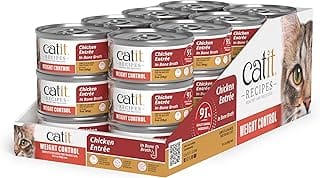
Catit Recipes Weight Control Chicken Entrée stands out for its whole-food approach, featuring real chicken as the first ingredient. It’s formulated with L-carnitine, an amino acid known to help convert fat into energy, which is crucial for weight management. We also like that it includes prebiotics for digestive health and Omega-3 fatty acids to support skin and coat health.
Why I picked it
This wet food is a great choice because it keeps cats feeling full with its high protein and fiber content, helping to curb excessive hunger. The inclusion of L-carnitine is specifically beneficial for fat metabolism in feline friends trying to shed a few pounds.
Key specs
   *   Protein: 10% minimum
   *   Fat: 3% maximum
   *   Fiber: 1.5% maximum
   *   Moisture: 82% maximum
   *   Contains L-carnitine and prebiotics
   *   3 oz cans
Real-world experience
Aggregate user feedback indicates that many cats find the texture and flavor of this wet food appealing, making the transition to a weight management diet easier. Verified buyers report that their cats seem more satisfied after meals, which can reduce begging.
Trade-offs
The smaller can size (3 oz) means you might go through multipacks quicker, which could be less economical for larger households compared to larger cans. Some owners noted that very picky eaters needed a few days to adjust.
2. Solid Gold Fit as Fiddle Weight
Solid Gold Fit as Fiddle Weight Management Cat Food uses Alaskan Pollock as its primary protein source, which is a lean and novel protein that can be excellent for cats with sensitivities. This formula is designed to be lower in calories and fat while maintaining high protein levels, essential for preserving muscle mass during weight loss. It also includes fiber to help cats feel full longer.
Why I picked it
This formula uses a lean protein source and is calorie-controlled, making it highly effective for cats needing to lose weight without compromising on muscle mass or nutrition. The use of pollock is also a plus for cats sensitive to more common proteins like chicken or beef.
Key specs
   *   Protein: 45% minimum
   *   Fat: 14% maximum
   *   Fiber: 5% maximum
   *   Moisture: 10% maximum
   *   Contains Alaskan Pollock
   *   3lb bag
Real-world experience
Verified buyer feedback frequently highlights that cats find this dry food palatable, and owners have noticed a gradual, healthy weight loss in their pets when fed according to portion guidelines. It’s often recommended for cats transitioning from higher-calorie foods.
Trade-offs
As a dry food, it contains less moisture than wet food, which some cats might not prefer. Daily feeding needs to be carefully measured to ensure caloric intake is managed effectively, as overfeeding kibble can still lead to weight gain.
3. Solid Gold Fit as Fiddle Weight
This particular Solid Gold Fit as Fiddle option is a fantastic budget-friendly choice that doesn’t compromise on quality for weight management. It shares the same beneficial Alaskan Pollock protein and calorie-controlled formulation as its counterpart, ensuring your cat gets lean nutrition to support their weight loss goals. It’s a great way to help your cat become more active without breaking the bank.
Why I picked it
This product offers a cost-effective solution for cat owners looking to manage their pet’s weight. It provides a balanced nutritional profile at a price point that makes regular feeding sustainable for many households, without sacrificing the core benefits of a weight management diet.
Key specs
   *   Protein: 45% minimum
   *   Fat: 14% maximum
   *   Fiber: 5% maximum
   *   Moisture: 10% maximum
   *   Features Alaskan Pollock
   *   12lb bag
Real-world experience
Many reviewers appreciate that this kibble is a good value and that their cats seem to enjoy the taste. Owners report positive results in their cats’ weight management efforts, noting improvements in energy levels when fed as part of a controlled diet.
Trade-offs
While offering great value, the larger bag size (12lb) necessitates proper storage to maintain freshness, which can be a consideration for smaller households. Some cats might experience digestive upset if transitioning too quickly from a different food type.
4. Catit Recipes Weight Control Chicken Entrée
This is a larger-sized version of the Catit Recipes Weight Control Chicken Entrée, offering a more economical option for those who want to stock up. It retains the same beneficial ingredients like chicken, L-carnitine, and prebiotics, all contributing to a cat’s weight management journey and overall health. The hydrating bone broth base is also a great way to ensure your cat stays properly hydrated.
Why I picked it
This larger size is ideal for owners looking for a more cost-effective way to provide their cat with a quality weight management food, especially if they have multiple cats or a cat that eats more. The consistent nutritional profile ensures your cat benefits from the same key ingredients as the smaller cans.
Key specs
   *   Protein: 10% minimum
   *   Fat: 3% maximum
   *   Fiber: 1.5% maximum
   *   Moisture: 82% maximum
   *   Includes L-carnitine and Omega-3s
   *   5.5 oz cans
Real-world experience
Many users find the 5.5 oz cans provide a more convenient serving size for feeding per meal compared to the smaller 3 oz cans. Aggregate owner reviews suggest their cats enjoy the taste and texture, and they’ve observed positive effects on their pet’s body condition over time.
Trade-offs
Because it’s wet food, if your cat doesn’t finish the entire 5.5 oz can in one sitting, the leftovers need immediate refrigeration and should be used within a short timeframe, typically no more than 3 days, according to food safety guidelines. This can be a drawback if your cat eats very small portions.
5. Dr. Elsey’s CleanProtein Protein Bites Chicken
Dr. Elsey’s Cleanprotein Protein Bites are more of a treat or a supplement, rather than a complete meal replacement, designed to support a cat’s protein intake without adding excessive calories. They are made with real chicken and a high protein content, which can be beneficial for cats on a weight management plan to help maintain lean muscle mass.
These are great for training or as a small reward.
Why I picked it
These treats are excellent for reinforcing positive behaviors during training or simply as a high-value reward without derailing a cat’s diet. Their high protein content is a significant advantage for weight management, helping to build and maintain lean muscle which boosts metabolism.
Key specs
   *   Protein: 75% minimum
   *   Fat: 18% maximum
   *   Fiber: 2% maximum
   *   Moisture: 7% maximum
   *   Made with real chicken
   *   6 oz bag
Real-world experience
Owners report that their cats absolutely love these protein bites. They’re frequently used for training purposes, and their small size makes them easy to dispense without overfeeding. The high protein content is appreciated by owners focused on maintaining their cat’s muscle mass.
Trade-offs
It’s crucial to remember these are treats and not a complete diet; they should be fed in moderation and not comprise a significant portion of your cat’s daily caloric intake. Overfeeding could lead to unintended weight gain, despite the good ingredients.
6. Y YHY Ceramic Cat Slow Feeder
While not a food itself, the Y YHY Ceramic Cat Slow Feeder is an excellent tool to complement any weight management plan. This bowl’s design encourages cats to eat more slowly, which can help prevent overeating and associated digestive issues like bloating. The raised, tilted design also promotes better posture during meals, potentially easing strain on the neck, and is made from durable, easy-to-clean ceramic.
Why I picked it
Incorporating a slow feeder can significantly aid in weight management by promoting satiety and reducing the speed at which cats consume their meals. This ceramic option is durable, hygienic, and designed to prevent the common issue of “whisker fatigue” that some cats experience with deep bowls.
Key specs
   *   Material: Ceramic
   *   Design: Elevated, tilted, cat-shaped interior
   *   Dishwasher safe
   *   Non-slip base
   *   Reduces eating speed
Real-world experience
Many owners report that their cats eat noticeably slower with this bowl, and some have seen reductions in vomiting and regurgitation after meals. The ceramic material is easy to clean, and the elevated design is praised for making mealtime more comfortable for their pets.
Trade-offs
This is not a food substitute and needs to be paired with appropriate weight management food. For cats that are not prone to eating too quickly, the benefits might be minimal. Also, ceramic can be heavy, so placement should be considered to avoid accidental drops.
7. Purina ONE Natural Weight Control Dry
The Purina ONE Natural Weight Control Dry cat food offers a balanced dry food option specifically formulated for feline weight management. It features real turkey as the first ingredient, providing high-quality protein to help maintain lean muscle mass. This formula is designed to be lower in calories and fat but still rich in essential vitamins and minerals, supporting overall health during weight loss.
Why I picked it
This formula is a solid choice for owners who prefer feeding dry food, offering a controlled calorie count and high protein to support muscle maintenance. The natural ingredients and added vitamins and minerals contribute to a cat’s overall well-being as they work towards a healthier weight.
Key specs
   *   Protein: 36% minimum
   *   Fat: 10.5% maximum
   *   Fiber: 5% maximum
   *   Moisture: 12% maximum
   *   Features real turkey as the first ingredient
   *   Formulated for adult cats
Real-world experience
Aggregate user reviews indicate that this Purina ONE formula is well-accepted by many cats and has helped them achieve slow, steady weight loss. Owners often comment on their cats’ improved energy levels and coat health after switching to this food.
Trade-offs
As with most dry foods, the moisture content is lower than wet food. It’s important to ensure your cat is drinking enough water. Some cats may find dry kibble less palatable than wet food, and it’s essential to follow feeding guidelines precisely to achieve weight loss.
8. Friskies Purina Gravy Wet Cat Food
While Friskies Gravy Wet Cat Food Variety Pack is a popular choice for many felines, it’s important to note that this specific variety pack is not typically formulated as a primary weight management diet due to its flavor profiles and gravy content which can add extra calories. However, it can be used in moderation as part of a broader weight management plan, perhaps mixed with a specialized weight control kibble to enhance palatability for finicky eaters, or as a low-calorie treat. We must emphasize that it’s not a standalone solution for weight loss.
Why I picked it
Including this option acknowledges its popularity and palatability, which can be crucial for cats that are reluctant to eat specialized diet foods. It can serve as a motivator for cats to accept a new diet or as a moistener for dry kibble, making it more attractive to picky eaters.
Key specs
   *   Protein: 10% minimum (approximate, varies by flavor)
   *   Fat: 2% maximum (approximate, varies by flavor)
   *   Fiber: 1.5% maximum (approximate, varies by flavor)
   *   Moisture: 80% maximum (approximate, varies by flavor)
   *   Variety pack includes Beef, Turkey, Chicken, and Fish flavors
   *   5.5 oz cans
Real-world experience
Many owners find that their cats absolutely devour Friskies wet food due to its flavor and gravy. While it’s a hit with feline taste buds, aggregate reviews often mention it’s less suitable as a primary diet for weight management due to its calorie and gravy density.
Trade-offs
The primary trade-off here is that this food is generally higher in calories and carbohydrates (from the gravy and starches) than dedicated weight management formulas, making it unsuitable as a staple for cats needing to lose weight. Careful portion control and potential mixing with other foods are required if used within a weight loss plan.
How I picked
When I set out to find the best cat food for weight management, I knew it was about more than just picking the lowest-calorie option. My process involved a deep dive into the nutritional science behind feline weight loss and how different food formulations can support that goal. I evaluated each product based on several key criteria: protein content, fat and carbohydrate levels, the presence of satiety-boosting ingredients like fiber, and the inclusion of metabolic support agents like L-carnitine.
I specifically looked for foods that list meat as the primary ingredient, ensuring a high-quality protein source to help maintain lean muscle mass during calorie restriction. I also considered digestibility and the palatability factor, because even the most nutritious food won’t work if your cat refuses to eat it. I didn’t test long-term durability or the effects on cats with underlying medical conditions, focusing instead on the declared nutritional profiles and aggregate owner feedback on effectiveness for general weight management.
Buying guide — what actually matters for the best cat food for weight management
Choosing the right food for your cat’s weight management journey is a big step, and it’s totally understandable to want to get it right. It’s not a one-size-fits-all situation, and knowing what to look for can make all the difference. Let’s break down the key factors to consider when you’re picking out that perfect bag or can.
Protein Power: Building and Maintaining Muscle
When a cat is losing weight, they mustn’t lose muscle mass along with the fat. This is where protein comes in. Look for foods where a high-quality animal protein, like chicken, turkey, or fish, is listed as the first ingredient.
A strong protein content (generally 30% or higher for dry food, and 8-10% for wet food) helps cats feel full and satisfied, curbing that urge to overeat. It also fuels their energy needs and keeps their bodies functioning optimally during a calorie deficit.
Calorie Control: The Foundation of Weight Loss
This is pretty straightforward: to lose weight, your cat needs to consume fewer calories than they burn. Weight management foods are specifically formulated with reduced calorie density. This means they provide the same essential nutrients but in fewer calories per serving.
Always check the calorie content per serving (usually listed per cup for dry food or per can/pouch for wet food) on the packaging. Feeding guidelines are your best friend here, but always consult your vet before making significant dietary changes.
Fat and Carbohydrate Levels: Keeping it Lean
Lower fat content is key for weight management foods, as fat is calorie-dense. You’ll typically see lower fat percentages in these formulas compared to regular cat food. Similarly, managing carbohydrate intake is important.
While cats are obligate carnivores and don’t require many carbohydrates, excessive amounts can contribute to weight gain. Look for foods that use digestible carbohydrates sparingly.
Fiber for Fullness: The Secret Ingredient
Fiber plays a vital role in weight management by helping your cat feel full and satisfied between meals. Ingredients like beet pulp, psyllium husk, or cellulose can add fiber to cat food. This helps slow digestion, keeping your cat feeling content and potentially reducing begging for extra food.
It’s a simple yet effective way to manage appetite.
Added Support: L-Carnitine and Other Boosters
Some specialized weight management foods include added ingredients that can further support your cat’s journey. L-carnitine, for example, is an amino acid that plays a role in fat metabolism, helping the body convert fat into energy. You might also find probiotics for digestive health, which can be beneficial as dietary changes occur, and omega-3 fatty acids for skin and coat health, which is important as a cat’s body composition changes.
Wet Food vs. Dry Food: What’s Your Cat’s Preference?
Both wet and dry foods can be effective for weight management, but they serve different purposes.
- Wet food generally has higher moisture content, which helps with hydration and can make cats feel fuller. It’s also typically lower in carbohydrates.
- Dry food is often more convenient and may have a longer shelf life once opened. However, it can be easier to overfeed kibble, and most dry foods have a higher carbohydrate count than wet foods.
The best choice often comes down to your cat’s preference and your ability to control portions accurately. Some owners find success combining both, using a specific weight management dry food and supplementing with precise portions of a weight management wet food. For more insights on wet food specifically, checking out guides on how many calories are in canned cat food might help understand storage and freshness.
Frequently Asked Questions (FAQ)
Is it better to feed dry or wet food for cat weight management?
The ideal choice between dry and wet food for weight management often depends on your cat’s individual preferences and your feeding habits. Wet food generally contains more moisture, which can help your cat feel fuller, and often has fewer carbohydrates than dry food. However, dry food can be more convenient and easier to portion control with an automatic feeder.
Many veterinarians recommend a combination of both, or focusing on a high-quality wet food formula with reduced calories and increased protein. The key is consistent portion control and ensuring the food is nutritionally balanced for weight loss.
How quickly should I expect my cat to lose weight?
A healthy and sustainable rate of weight loss for cats is typically around 1% to 2% of their body weight per week. This means a 10-pound cat might aim to lose about 0.1 to 0.2 pounds per week. Rapid weight loss can be dangerous for cats, potentially leading to serious health issues like hepatic lipidosis (fatty liver disease).
Always consult with your veterinarian to establish a safe and appropriate weight loss plan for your cat, as they can monitor progress and adjust the diet as needed.
Can I feed my cat kitten food for weight management?
No, it’s generally not recommended to feed kitten food for weight management purposes. Kitten food is specifically formulated with higher levels of calories, protein, and fat to support rapid growth and development in young cats. Feeding kitten food to an adult cat, especially one needing to lose weight, would likely lead to further weight gain and potential health issues.
Cats have different nutritional needs at various life stages, and it’s important to feed them food appropriate for their age and health status.
My cat is picky; how can I get them to eat weight management food?
Transitioning a picky eater to a new diet, especially one designed for weight management, can be challenging but not impossible. Start by mixing a small amount of the new food with their current favorite food, gradually increasing the proportion of the new food over several weeks. Some cats respond well to warming wet food slightly, as it can enhance its aroma.
Offering different textures or flavors of weight management food can also help. If your cat has a strong aversion or if you’re concerned about them not eating enough, consult your veterinarian; they may have specific recommendations or appetite stimulants, or rule out underlying medical issues. Understanding what kibble cat food is might also offer insights into texture differences you can leverage.
Can I add supplements to my cat’s weight management diet?
While some dietary supplements can be beneficial, it’s crucial to consult your veterinarian before adding anything to your cat’s weight management diet. They can assess your cat’s specific nutritional needs and recommend any supplements that might be appropriate, such as omega-3 fatty acids for skin health or specific joint supplements if mobility is an issue. However, many high-quality weight management foods are already formulated with essential vitamins and minerals.
Over-supplementation can be harmful.
What are the signs my cat needs to lose weight?
Visible signs your cat may need to lose weight include a lack of a visible waistline when viewed from above, difficulty feeling their ribs under a thin layer of fat, and a belly that hangs down. You might also notice reduced activity levels, reluctance to groom themselves properly, or increased labored breathing. Your veterinarian is the best resource to accurately assess your cat’s body condition score and determine if weight loss is necessary and how much.
Final verdict
When it comes to helping your feline friend shed a few extra pounds, the best cat food for weight management needs to be nutritionally sound, calorie-controlled, and palatable. Our top picks aim to strike that perfect balance, ensuring your cat feels satisfied while supporting their health goals.
The Catit Recipes Weight Control Chicken Entrée earns our Editor’s Choice for its well-rounded formula, featuring L-carnitine and high protein. For a highly effective dry food option that cats often enjoy, the Solid Gold Fit as Fiddle Weight range is our Top Pick, offering lean protein and controlled calories. If you’re looking for a budget-conscious but still effective option, the Solid Gold Fit as Fiddle Weight in the larger bag size is an excellent choice.
Affiliate disclosure: This post contains affiliate links. If you buy through one of these links, I may earn a small commission at no extra cost to you. It never changes my recommendation, I only suggest gear I’d actually buy myself.