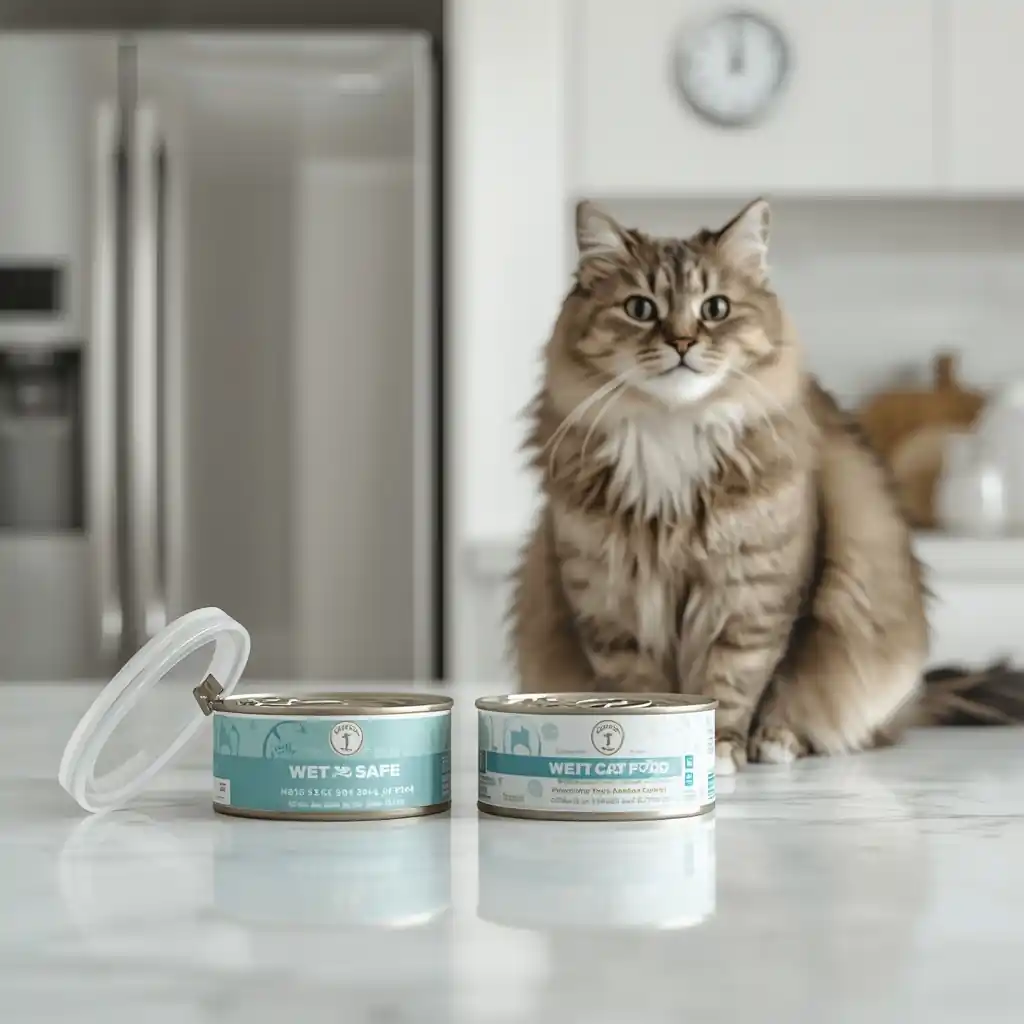
How Long Is Wet Cat Food Good for Once Opened 2026
If you’ve ever stood in front of your fridge wondering whether that half-empty can of cat food is still safe to feed, you’re not alone. The question of how long wet cat food is good for once opened is one of the most common ones we hear from cat owners. Feed it too late, and you risk your cat’s health.
Throw it too early, and you’re wasting money.
Manufacturer guidelines and food safety standards from the FDA’s Center for Veterinary Medicine set clear expectations here. Once opened, wet cat food should be refrigerated and used within 3 to 5 days. But that timeline shifts depending on a few key factors.
Let’s walk through exactly what you need to know.
Quick Answer: How long does opened wet cat food last
Opened wet cat food lasts 2 hours at room temperature. Refrigerated, it stays good for 3 to 5 days. Always cover the can or pouch.
Use the sniff test carefully. When in doubt, throw it out.
Why Getting This Right Matters for Your Cat’s Health
Wet cat food is a perfect breeding ground for bacteria. It’s high in moisture, packed with protein, and kept at room temperature the moment you open it. Bacteria like Salmonella, Listeria, and E. coli double every 20 minutes in the right conditions.
That’s not a risk worth taking.
The consequences of feeding spoiled food go beyond a picky cat walking away. Foodborne illness in cats can cause vomiting, diarrhea, fever, and loss of appetite. For kittens, senior cats, or cats with existing health issues, the risks are even higher.
Cats with kidney disease or compromised immune systems are especially vulnerable, which is why proper food storage matters even more when you’re managing specific health needs.
If your cat already has a sensitive stomach or digestive issues, feeding expired wet food can trigger a flare-up that takes days to resolve. We’ve covered the best options for cats with sensitive stomachs in our guide on cat food for digestive health, and the first rule there is always starting with fresh food.
The Core Timeline: Room Temperature vs. Refrigerated
The timeline breaks down into two clear categories. Here’s what the research and manufacturer standards tell us.
| Condition | Safe Window | What Happens After |
|---|---|---|
| Left out at room temperature (above 40°F / 4°C) | Up to 2 hours | Bacteria multiply rapidly beyond this point |
| Refrigerated in a covered container (below 40°F / 4°C) | 3 to 5 days | Flavor and texture decline; spoilage risk increases after day 5 |
| Frozen in an airtight container | Up to 3 months | Texture changes, but food stays safe if thawed properly |
Room temperature rule. The 2-hour limit includes the time your cat takes to eat. If they walk away from the bowl and come back an hour later, that food should go. It’s not worth saving a few cents on food to risk a vet bill.
Refrigerated window. The 3 to 5 day range is a general guideline, not a guarantee. Some premium brands with fewer preservatives may spoil faster. Some mass-market brands with more stabilizers may last closer to the 5-day mark.
Always check the specific can for manufacturer instructions.
The freezer option. Freezing extends the life significantly, but it changes the texture. Many cats refuse thawed wet food because the consistency turns watery or grainy. If you do freeze, portion it into single servings first so you only thaw what you need.
What Makes It Spoil Faster (or Slower)
Not all wet cat food is created equal when it comes to shelf life after opening. Several factors determine how fast that can go from safe to questionable.
Preservative content. Some brands use natural preservatives like tocopherols (vitamin E) or ascorbic acid (vitamin C). Others use synthetic preservatives. Natural preservatives are great for your cat’s long-term health, but they don’t hold up as long once the can is open.
If you feed a natural or organic wet food, lean toward the 3-day end of the window. For cats on a premium organic diet, we have recommendations in our guide to organic cat food for indoor cats.
Texture and ingredients. Pâtés and finely ground foods tend to have more surface area exposed to air. That means faster oxidation and bacterial growth. Chunks in gravy or shreds have less exposed surface area and may stay fresh a bit longer.
Foods with higher fat content also spoil faster because fats oxidize quickly.
How you handle it. This is the biggest variable. If you use a clean spoon to scoop out the food and immediately cover and refrigerate the can, you’re giving it the best chance. If you let your cat eat directly from the can and then put the leftovers back in the fridge, you’ve introduced bacteria from your cat’s mouth.
That can cut the safe window by a full day or more.
Can size matter? A 3-ounce can is typically a single meal for most cats. A 13-ounce can might take several days to finish. If you’re feeding a single cat, the larger can means more leftovers and more chances for something to go wrong.
Consider portioning it out immediately into separate containers.
How to Store Opened Wet Cat Food the Right Way
Storing wet cat food properly is simple once you know the steps. Here’s the process that gives you the longest safe window and the best quality for your cat.
Step 1: Transfer or cover immediately. The moment your cat finishes eating or the moment you scoop out what you need, cover the can. A plastic can lid that fits snugly is best. Plastic wrap or aluminum foil works in a pinch but doesn’t seal as tightly.
Some people transfer the food to a small glass container with a lid. That’s actually better because glass doesn’t react with the food, and the seal is usually tighter.
Step 2: Refrigerate within 2 hours. This clock starts from when you opened the can, not when your cat stopped eating. If you opened a can at noon and your cat grazed until 1 PM, you still need it in the fridge by 2 PM. Set a timer if you need to.
Step 3: Label the container. Write the date directly on the lid with a marker. This takes five seconds and removes all guessing. When you’re staring at three covered cans in the fridge, you won’t remember which one is from Tuesday.
Step 4: Keep the fridge at the right temperature. Your refrigerator should be at or below 40°F (4°C). Use a fridge thermometer if you’re not sure. Many home refrigerators run warmer than the dial suggests, especially in the door shelves where you might store cat food.
Step 5: Reheat safely. Cats often refuse cold food straight from the fridge. That’s fine. Warm it up by adding a splash of warm water and stirring.
Or microwave it for 10 to 15 seconds and stir thoroughly to eliminate hot spots. Never microwave in a metal can. Transfer to a bowl first.
What about the sniff test? Your nose is a decent first line of defense, but it’s not foolproof. Some spoiled cat food won’t smell obviously bad, especially if it’s gone off in the fridge rather than at room temperature. If it’s been more than 5 days, don’t rely on your nose.
Toss it.
How to Tell If It’s Gone Bad (Without Guessing)
Your cat’s nose is better at this than yours. Cats can detect subtle changes in smell and texture that we miss entirely. But you shouldn’t rely on your cat’s refusal alone.
Some cats will eat spoiled food if they’re hungry enough, and that’s when problems start.
Visual signs. Look for mold. It can appear as fuzzy spots in green, white, or gray. Also, watch for discoloration.
If the food has turned darker or developed a brownish ring around the edges, that’s a sign of oxidation. Oxidation itself isn’t dangerous, but it means the food is past its prime, and bacteria may have moved in.
Texture changes. Fresh wet cat food should have a consistent texture. If you see separation, watery liquid pooling on top, or a slimy film, those are red flags. The slime is especially concerning.
It means bacterial colonies have formed on the surface.
Smell test. Fresh wet cat food has a strong smell. That’s normal. But spoiled food smells different.
It can turn sour, rancid, or acquire a chemical-like odor. If you open the can and get a whiff that makes you pull back, trust your instinct.
The safest rule. If it’s been more than 5 days in the fridge, toss it. Even if it looks and smells fine. Some bacteria don’t produce noticeable odors until they’ve reached dangerous levels.
Your eyes and nose are not reliable enough on their own past that window.
Common Storage Mistakes That Can Make Your Cat Sick
Leaving the can uncovered in the fridge. This is the most common mistake we see. The fridge is dry and cold, but uncovered food still picks up bacteria from the air and other foods. Always cover it.
A loose piece of foil isn’t enough. Use a tight-fitting plastic lid or transfer to a sealed container.
Feeding directly from the can. If your cat eats straight from the can, their saliva introduces bacteria into the leftovers. Those bacteria multiply in the fridge, just slower. You effectively reset the clock on the whole can.
Portion out what your cat will eat into a bowl and refrigerate the rest immediately.
Storing in the fridge door. The door is the warmest part of the fridge. Every time you open it, the door items get exposed to room temperature. Store opened cat food on a middle shelf toward the back, where the temperature is most stable.
That small change can add a full day of safe storage.
Reusing the same container without washing it. If you transfer leftovers to a plastic container, wash it with hot soapy water between uses. Residual fat and protein create a biofilm that harbors bacteria. Running it through the dishwasher on a hot cycle works well.
Assuming all brands have the same shelf life. Some premium natural brands specifically recommend using opened food within 24 hours. Others say 3 days. Always check the label.
If you’re feeding a cat with specific health needs, you might want to stick with the shorter end of the range. Our guide to the best wet food for cats with skin allergies covers brands that prioritize minimal ingredients, and those often have shorter post-opening windows.
Can You Freeze Leftover Wet Cat Food?
Yes, you can freeze open wet cat food. It’s a great way to avoid waste if you bought a large can or your cat is a picky eater. Freezing stops bacterial growth completely.
But it does change the texture. Best Organic Cat Food for Indoor Cats.
How to freeze it. Portion the food into single servings before freezing. Use an ice cube tray or small silicone molds. Once frozen, pop the portions out and store them in a freezer bag.
Label the bag with the date. Frozen wet cat food stays safe for up to 3 months.
How to thaw it. Move a portion to the fridge the night before you plan to use it. Thawing takes about 8 to 12 hours in the fridge. If you need it faster, put the frozen portion in a sealed bag and run it under warm water.
Never microwave frozen wet food. It heats unevenly and can create hot spots that burn your cat’s mouth.
Texture changes. Freezing breaks down the food’s structure. When thawed, it becomes softer and sometimes watery. Many cats notice the difference and may refuse it.
If your cat is already a picky eater, you might want to test a small frozen portion before committing to a whole batch. Our guide to wet food for picky eaters covers strategies for texture-sensitive cats.
Thawed food rules. Once thawed, treat it like freshly opened food. Use it within 2 hours at room temperature or within 3 days in the fridge. Do not refreeze thawed wet cat food.
Each freeze-thaw cycle degrades quality and increases the risk of bacterial growth. Explore the Best Dry Food for Cats With Skin Allergies.
What to Do If Your Cat Eats Spoiled Food
If you suspect your cat has eaten spoiled wet food, stay calm. Most healthy adult cats will experience mild symptoms and recover on their own. But you need to monitor closely.
Watch for symptoms. Vomiting, diarrhea, lethargy, and loss of appetite are the most common signs. Symptoms usually appear within 2 to 6 hours of eating the spoiled food. Some cats develop a fever or show signs of abdominal pain, like hiding or refusing to be touched.
What to do at home. Remove all food for 6 to 12 hours to let your cat’s digestive system settle. Provide fresh water at all times. Dehydration is the biggest risk with vomiting and diarrhea.
If your cat keeps water down after 12 hours, offer a small portion of bland food. Plain boiled chicken or a prescription gastrointestinal diet works well.
When to call the vet. If vomiting or diarrhea continues beyond 24 hours, call your veterinarian. Also, call if you see blood in the vomit or stool, if your cat seems unusually weak, or if they stop drinking water entirely. Kittens, senior cats, and cats with existing health conditions like kidney disease need earlier intervention.
The best wound care for cats guide covers general first aid, but food poisoning requires professional attention in serious cases.
Prevention after the fact. Check your storage routine. Did you leave the can out too long? Was the seal loose?
Fix the specific mistake so it doesn’t happen again. If you’re unsure about your fridge temperature, buy a thermometer. They cost about five dollars and give you peace of mind.
Real-Life Scenarios: Applying the Rules to Your Routine
Scenario 1: The single cat household. You have one cat who eats about half a 5.5-ounce can per meal. You open a can at breakfast, feed half, and cover the rest. The leftover goes in the fridge immediately.
It’s good for dinner that night and breakfast the next morning. After that, toss the remainder. You’re better off buying 3-ounce cans for single meals.
Scenario 2: The multi-cat household. You have two cats who together finish a 13-ounce can in one sitting. Great. No leftovers means no storage worries.
But if they don’t finish it, portion the remaining food into separate containers immediately. Label each one. Feed them within 2 days.
If your cats are on different diets, check our guide to the best wet food for Ragdoll cats or other breed-specific recommendations for portion guidance.
Scenario 3: The free feeder. Your cat grazes throughout the day. Wet food is not ideal for free feeding. It should not sit out for more than 2 hours total.
If your cat prefers grazing, consider a compromise. Offer a small portion of wet food in the morning and evening, and leave dry food available during the day. Our comparison of wet versus dry food covers the pros and cons of each approach.
Scenario 4: The power outage. Your fridge goes out for 4 hours. The door stayed closed the whole time, so the food is likely still safe. If the outage lasted longer than 4 hours, the food may have spent time above 40°F.
When in doubt, toss it. The cost of a new can is far less than a vet visit. If you need to stock up on fresh food after an outage, our guide to the best cat food for weight management can help you choose appropriate options.
Scenario 5: Traveling with wet food. If you’re taking wet food on a road trip, pack it in a cooler with ice packs. Only open a can when you’re ready to feed. Leftovers from a road trip meal should be used within 2 hours or discarded.
Don’t try to save them for the next stop unless you have a reliable way to keep them cold.
FAQs About Opened Wet Cat Food Storage
Can I leave wet cat food out overnight?
No. Wet cat food left out for more than 2 hours should be discarded. Bacteria multiply rapidly at room temperature.
Overnight is far too long.
How do I know if opened wet cat food has gone bad?
Look for mold, discoloration, a slimy film, or a sour smell. But don’t rely on your senses alone. If it has been refrigerated for more than 5 days, toss it regardless of how it looks or smells.
Can I reheat refrigerated wet cat food?
Yes. Add a splash of warm water and stir, or microwave in a bowl for 10 to 15 seconds. Stir thoroughly to remove hot spots.
Never microwave the metal can.
Is it safe to mix old and new wet cat food?
Not recommended. Mixing fresh food with leftovers from a previous meal can introduce bacteria into the new food. If you want to stretch a meal, thaw a frozen portion instead.
Can I store opened wet cat food in a different container?
Yes, glass or plastic containers with tight seals work well. They often seal better than the original can lid.
Just wash the container thoroughly between uses.
How long is wet cat food good for once opened if I freeze it?
Frozen wet cat food stays safe for up to 3 months. Thaw it in the fridge overnight. Use it within 3 days after thawing.
Do not refreeze.
Final Takeaway: The Simple Routine That Keeps Your Cat Safe
The rules are straightforward. Refrigerate within 2 hours. Use within 3 to 5 days.
When in doubt, throw it out. Freeze portions if you want to extend the window.
A few simple habits make all the difference. Label your cans with the date. Store them on the middle shelf.
Use a clean spoon every time. These small actions protect your cat from foodborne illness and save you money on wasted food.
If you have a cat with specific dietary needs, whether it’s weight management, kidney health, or a sensitive stomach, always check the manufacturer’s guidelines for that specific food. Some brands have shorter windows. Your cat’s health is worth the extra minute it takes to read the label.