Why Does My Dog Swallow His Food Whole 2026
You've probably watched your dog inhale his dinner in mere seconds, leaving you wondering why he swallows his food whole. This eating behavior is more common than you might think and often stems from deep-seated instincts or learned patterns. While it can seem harmless, there are potential health risks associated with this speed eating that every dog owner should be aware of.
Our research into canine feeding habits confirms that understanding the root cause is the first step toward managing it. Many dogs, as of 2026, exhibit this behavior, with some studies suggesting a significant percentage of household pets engage in rapid food consumption. Fortunately, several practical strategies can help slow your dog down and ensure they eat safely and digest properly.
Quick Answer
Dogs swallow food whole primarily due to natural instincts for survival. They may be trying to hoard food from perceived competitors or simply eating quickly to avoid losing their meal. This is often exacerbated by learned behaviors from their environment or stress.
Rapid eating can lead to choking, indigestion, vomiting, and the serious condition known as bloat.
Instincts and Environment: The Root Causes
The Wild Within: Primal Eating Habits
Deep down, your dog's DNA carries the legacy of his wild ancestors. In nature, food isn't always readily available, and competition is fierce. A wolf or a stray dog that eats slowly is more likely to have its meal stolen by a more dominant animal or simply find the food gone by the time it returns.
This intense pressure instilled a survival mechanism: eat quickly, eat a lot, and eat it before someone else does. This instinctual drive to consume food rapidly is a powerful force, even for our pampered pets who have regular access to their food bowls. It’s a primal response to prevent scarcity and ensure they get necessary sustenance.
Learned Behaviors: Dinner Race Dynamics
Beyond instinct, what a dog experiences growing up significantly shapes how he eats. If your dog came from a multi-pet household, he might have learned that mealtime is a race. He saw other dogs eating fast, and to get his share, he adapted.
This learned competition can persist even when he's the only pet. Similarly, if he was a rescue and experienced periods of food insecurity, that fear of not having enough can translate into gobbling food down at lightning speed once he feels safe. It’s a behavioral adaptation driven by past experiences, a learned survival tactic for both instinctual and environmental reasons.
Emotional Factors: Excitement or Insecurity
Mealtime can trigger strong emotions in dogs. For many, the anticipation of food is incredibly exciting, and this enthusiasm can manifest as a super-fast eating style. They're simply too eager to get to the delicious kibble.
On the flip side, some dogs eat quickly out of insecurity or anxiety. If your dog feels his food source is threatened, or if there are noises or disturbances during mealtime that make him uneasy, he might gulp his food down to finish and retreat to a safer space. Understanding your dog's individual emotional state around food is key to identifying this cause.
The Dangers of Speed Eating
Immediate Risks: Choking and Gagging
When a dog swallows food whole, they bypass the natural chewing process. This means larger pieces of kibble or food can go down the esophagus much faster, significantly increasing the risk of choking or gagging. Their gag reflex might kick in, but if a piece is too large or gets lodged improperly, it can obstruct their airway.
This is a terrifying situation for both dog and owner, and it can happen in an instant. It’s a direct consequence of not breaking down food adequately before swallowing it.
Digestive Woes: Air Swallowing and Vomiting
One of the most common side effects of rapid eating is swallowing a large amount of air along with the food. This excess air can cause significant discomfort for your dog, leading to a condition called aerophagia. The air can distend the stomach, causing bloating and discomfort, and often results in the dog regurgitating their entire meal shortly after eating.
This cycle of eating, swallowing air, and then vomiting is not only distressing for your pet but also means they aren't effectively digesting and absorbing the nutrients from their food.
Serious Concerns: The Threat of Bloat (GDV)
Perhaps the most frightening health complication linked to fast eating is Gastric Dilatation-Volvulus (GDV), commonly known as bloat. While fast eating is a contributing factor, it’s not the sole cause. Bloat occurs when the stomach fills with gas and then twists, cutting off blood supply and preventing gas from escaping.
This is a life-threatening emergency that requires immediate veterinary intervention and can be fatal within hours if not treated. Reducing the speed at which your dog eats is one proactive measure that can help lower the risk.
Nutrient Uptake: Are They Getting Enough?
If your dog consistently swallows food whole and frequently vomits it back up, they are likely not absorbing the full nutritional benefits of their meals. The food is passing through their system too quickly to allow for proper digestion and absorption of essential vitamins, minerals, and proteins. This can lead to long-term health issues, including weight loss, a dull coat, and a weakened immune system, even if they are eating the recommended amount of high-quality food.
Ensuring proper digestion is crucial for their overall health and well-being.
When to Call Your Vet
Red Flags in Eating Habits
While occasional rapid eating might just be a quirky habit, certain changes or accompanying symptoms warrant a call to your veterinarian. If your dog has suddenly started swallowing food whole when they never did before, or if their eating speed has dramatically increased, it’s a signal that something might be going on. This abrupt change in behavior can sometimes indicate underlying medical issues, stress triggers, or a need to reassess their diet or environment.
Always pay attention to sudden shifts in your dog's routine.
Recognizing Distress Signals
Beyond just eating fast, watch for other signs that can indicate a problem. Excessive yawning or lip-licking during or after meals can signal underlying stress or nausea. If your dog is gagging, coughing, or struggling to swallow, that's a direct sign of a potential blockage or difficulty.
Abdominal discomfort, such as a hard or distended belly, or your dog acting unusually lethargic or restless after eating, are serious indicators that could point to bloat or other internal issues. These distress signals should never be ignored and require prompt veterinary attention.
The Power of Slow Feeder Bowls
Slow feeder dog bowls are specifically designed to make your dog eat more slowly. They achieve this by incorporating physical barriers within the bowl, such as raised ridges, cones, or maze-like patterns. These obstacles force your dog to maneuver their snout around them to access the food, naturally slowing down their consumption.
Manufacturer specifications often cite that these bowls can reduce eating speed by up to 50%.
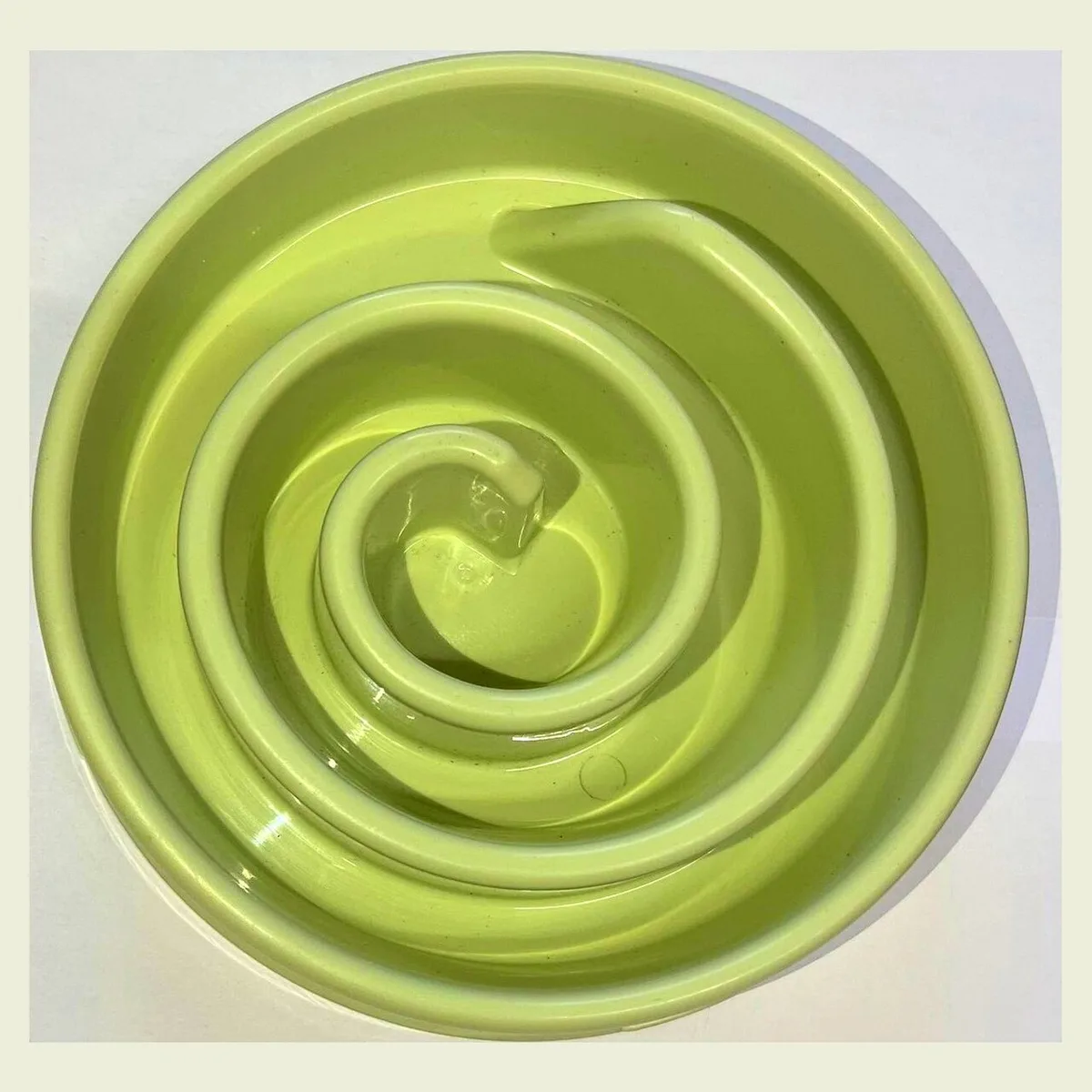
This simple tool turns mealtime into a more engaging puzzle for your dog. Instead of inhaling kibble in under a minute, they might take 5 to 15 minutes to finish, depending on the bowl’s complexity and your dog’s determination. Several brands offer these bowls, varying in material (plastic, stainless steel, ceramic) and the intricacy of their designs, allowing you to choose one that suits your dog's size and enthusiasm.
Different types of slow feeder bowls exist for various needs. Some are shallow with broad dividers, ideal for brachycephalic (short-nosed) breeds, while others feature deeper, more complex mazes for highly food-motivated dogs. The key is that they require your dog to work for each bite, preventing them from gulping air or large chunks of food.
Engaging with Puzzle Feeders
Puzzle feeders take the concept of slowing down eating a step further by adding a mental challenge. These interactive toys require your dog to use their paws, nose, or a combination of both to release kibble or treats. They range from simple treat-dispensing balls to more complex boards with sliding compartments and levers.
These feeders transform mealtime from a passive activity into an active problem-solving session for your dog.
Using puzzle feeders can significantly increase the time it takes for your dog to eat. This extended engagement can also help reduce boredom and anxiety in dogs, providing mental stimulation that tires them out. It’s essential to choose a puzzle feeder that is appropriate for your dog's intelligence level and physical capabilities.
Starting with a simpler puzzle and gradually moving to more complex ones can help prevent frustration for your dog.
For a dog that swallows food whole, a puzzle feeder is an excellent option because it requires conscious effort and a slower, more deliberate approach to accessing their food. It taps into their natural foraging instincts, making mealtime more rewarding and enriching. Many owners report that their dogs become more focused and less anxious during meals when using these interactive toys.
Simple Tricks: Spreading Food Out
Sometimes, the easiest solutions are the most overlooked. If you don't have a specialized slow feeder bowl, you can easily create a similar effect by spreading your dog's kibble across a large, shallow surface. A baking sheet, a wide cookie pan, or even a large, flat plate can work well.
This method forces your dog to lick or pick up individual pieces of kibble, significantly slowing down their consumption rate.
This technique is particularly useful for dogs that are still adjusting to the idea of eating more slowly or for owners who want a quick, no-cost solution. By scattering the food, you eliminate the possibility of your dog getting a large mouthful at once. They have to work a bit harder to gather each piece, making the meal last longer and reducing the amount of air they might swallow.
What’s great about this method is its adaptability. You can control how much you spread the food out to adjust the challenge. If your dog is still eating too fast, you can make the distribution even more sparse.
It’s a practical way to manage fast eating without needing to purchase new equipment immediately, letting you see if a slower pace benefits your dog before investing in dedicated products.
The Comfort of Hand-Feeding
For certain dogs, particularly those who may show signs of anxiety around their food or are very sensitive, hand-feeding can be a surprisingly effective method to encourage slower eating. By offering kibble one piece at a time from your hand, you are not only directly controlling the pace of consumption but also reinforcing a positive interaction and building trust. This one-on-one approach can help reassure your dog that their food is secure and that they don't need to rush.
This technique is especially beneficial for dogs with a history of food guarding or insecurity. The act of being hand-fed can diminish anxiety and create a calmer association with mealtime. It requires patience from the owner, as it can take longer to feed a full meal this way.
However, for dogs that struggle with speed eating due to emotional reasons, the investment in time can yield significant improvements in their eating habits and overall sense of security.
While hand-feeding isn't practical for every meal or for every owner, incorporating it occasionally can be a powerful tool. It can help reset a dog's relationship with their food, demonstrating that meals are not a competition and promoting a more relaxed and mindful approach to eating. It’s a gentle way to reinforce good eating habits and can be a bonding experience for you and your dog.
Feeding Solo: Separating Pets
If you share your home with multiple pets, especially dogs, it's critical to ensure they are fed separately. Competition for resources, even among pets who are otherwise friendly, can trigger or exacerbate rapid eating behaviors. A dog might feel pressured to eat quickly to prevent a housemate from stealing their food, or simply because of the general atmosphere of competition that can arise during feeding time.
This is true even if you have best cat food for anemic cats and are feeding them separately from dogs.
Separating pets during mealtimes creates a secure environment where each animal can eat at its own pace without external pressure. This means feeding them in different rooms, crates, or even at different times if necessary. By eliminating the competitive element, you remove a significant trigger for speed eating, allowing your dog to revert to a more natural, less rushed consumption rhythm.
This practice is fundamental for managing various behavioral issues, including food aggression.
This approach isn't just about preventing dogs from swallowing food whole; it's also vital for monitoring each pet's individual intake and ensuring they are consuming their appropriate best food for cats with hyperthyroidism or canine diet without interference. It allows you to observe their eating habits closely and ensure they are not experiencing any distress or digestive upset. For households with multiple animals, consistent separation at meal times is a cornerstone of good pet care.