Guide to Can Puppies Eat Fresh Pet Dog Food 2026
Thinking about feeding your new puppy fresh pet dog food? It's a common question for owners who want the absolute best for their furry family members as they grow. While the appeal of wholesome, minimally processed ingredients is strong, puppyhood presents unique nutritional challenges that demand careful consideration.
Getting it wrong can unfortunately lead to serious health issues for your rapidly developing pup.
At its core, puppy nutrition must support growth, development, and a robust immune system. Commercial fresh dog foods, often made with human-grade ingredients like meat, vegetables, and grains, can offer certain advantages. However, for puppies, the emphasis shifts significantly towards precisely balanced nutrient profiles that meet established standards for growth stages, like those set by the Association of American Feed Control Officials (AAFCO).
Quick Answer
Yes, puppies can eat fresh pet dog food, but with significant caveats. It must be nutritionally complete and balanced for puppies. Many commercial fresh foods are formulated to meet AAFCO growth standards.
Homemade fresh diets require expert veterinary formulation to avoid deficiencies. Unbalanced fresh food can cause severe health problems in puppies. Always consult your veterinarian before switching your puppy's diet.
Why Puppy Nutrition Accuracy Matters
Puppyhood isn't just a smaller version of adult life; it's a critical period of rapid development. Bones, muscles, organs, and the brain are all undergoing intense growth and changes. This is why their dietary needs are so specific and why mistakes can have such lasting consequences.
A puppy’s metabolism is also different from an adult dog’s, requiring different ratios of nutrients and higher overall caloric intake per pound of body weight to fuel their growth.
For instance, the calcium-to-phosphorus ratio is absolutely vital for proper skeletal development. Too little or too much of either mineral, or an imbalance between them, can lead to painful conditions like rickets or hip dysplasia, issues that can plague a dog for life. Similarly, essential fatty acids are crucial for brain development and coat health.
Feeding a diet that isn't specifically designed for the developmental stage of a puppy risks not only stunting their growth but also creating long-term health problems that can be costly and heartbreaking to manage.
The Basics: What is Fresh Dog Food for Puppies?
Fresh dog food, in general, refers to pet food that is minimally processed and made with whole, recognizable ingredients. Unlike traditional dry kibble, which undergoes high-heat processing, fresh dog food is often cooked at lower temperatures or even served raw (though raw feeding for puppies carries its own set of risks). Ingredients commonly found include high-quality meats (chicken, beef, lamb), select vegetables (carrots, peas, sweet potatoes), fruits (like blueberries), and sometimes grains or pseudo-grains (like rice or quinoa).
For puppies, this definition narrows considerably. A food being "fresh" doesn't automatically make it suitable for a growing pup. The crucial difference lies in its formulation.
Reputable commercial fresh dog food brands that cater to puppies will state that their product is "complete and balanced" for growth, often referencing AAFCO standards on their packaging. These claims mean the food has been scientifically formulated to provide all the necessary nutrients in the correct proportions for a puppy’s life stage, as confirmed by laboratory analysis or feeding trials. Homemade recipes, while appealing for ingredient control, must be formulated by a veterinary nutritionist to ensure they meet these precise requirements.
This is not a task for guesswork.
Essential Nutrients Puppies Need for Growth
Puppies have a heightened need for specific nutrients to fuel their development. Think of it like building a house; you need the right types and quantities of building materials to ensure the structure is strong and sound. For puppies, this means a carefully calibrated mix of macronutrients and micronutrients.
Key Nutrients by the Numbers (AAFCO Standards)
The Association of American Feed Control Officials (AAFCO) provides guidelines that are the benchmark for pet food nutrition in many regions. For puppy growth, AAFCO defines minimum and maximum levels for essential nutrients. For example, AAFCO typically recommends a minimum of 22% protein on a dry matter basis for puppy growth and a minimum of 8.5% fat.
Crucially, they also specify strict ranges for minerals like calcium (minimum 1% and maximum 1.8%) and phosphorus (minimum 0.8% and maximum 1.3%), ensuring a healthy calcium-to-phosphorus ratio between 1:1 and 1.3:1. These numbers aren't arbitrary; they are based on extensive research into canine physiology.
Protein, Fats, and Carbs for Growing Pups
- Protein: This is the building block for muscles, organs, skin, and coat. Puppies require a higher percentage of protein than adult dogs to support their rapid growth. Sources should be highly digestible and of good quality, like muscle meat and organs from reputable animal sources.
- Fats: Fats are an essential energy source and are vital for absorbing fat-soluble vitamins (A, D, E, K). They also provide essential fatty acids, like Omega-3 and Omega-6, which are critical for brain development, eye health, and skin and coat condition. The quality of fats matters; for example, sources rich in omega fatty acids are highly beneficial.
- Carbohydrates: While not as critical as protein and fat, carbohydrates provide energy and fiber. They can be sources of vitamins and minerals when derived from whole grains, vegetables, or fruits. Digestible carbohydrates are important to provide energy without causing digestive upset.
Risks and Dangers of Unbalanced Puppy Diets
Feeding a puppy a diet that's not specifically formulated for growth can have serious, long-lasting consequences. The risks aren't just about poor coat condition; they can impact skeletal structure, organ development, and even a puppy's cognitive function. Many owners underestimate how critical precise nutrient balance is during this vulnerable stage.
Nutritional Deficiencies and Imbalances
A deficiency in a single nutrient, or an imbalance between several, can lead to a cascade of health problems. For instance, as mentioned, incorrect calcium and phosphorus levels can cause orthopedic issues, leading to pain and mobility problems throughout the dog's life. Deficiencies in vitamins, such as Vitamin A or D, can affect vision and bone health respectively.
Conversely, excessive nutrient intake can also be harmful. Too much of certain vitamins or minerals can be toxic.
When considering homemade fresh diets, the danger of imbalance is particularly high. It’s incredibly difficult for an average pet owner to calculate the precise nutritional needs of a growing puppy and ensure a homemade diet meets them consistently. Even slight variations in ingredient quantities can throw off the delicate balance required for healthy development.
For owners looking at commercial fresh foods, verifying that the product explicitly states it is formulated for "puppy growth" and meets AAFCO standards is non-negotiable. You can check their website or packaging for this crucial information.
Foodborne Pathogens and Contamination Risks
Fresh foods, especially those that are raw or minimally cooked, naturally carry a higher risk of bacterial contamination compared to highly processed kibble. Pathogens like Salmonella, E. coli, and Listeria can be present in raw meats and other ingredients. For adult dogs, these might cause mild digestive upset, but for puppies, whose immune systems are still developing, these infections can be severe and even life-threatening.
Proper handling, storage, and preparation are paramount if you choose a fresh food diet for your puppy. This includes strict hygiene in your kitchen, immediate refrigeration or freezing of food, and ensuring all food is prepared and stored in sanitary conditions. Commercial fresh food manufacturers adhere to strict safety protocols during their preparation process, often cooking their foods to kill pathogens while preserving nutrient integrity.
However, vigilance is still required, especially during the transition and initial feeding phases. For owners considering homemade raw diets, the risk of transmitting foodborne illness to both the puppy and the humans in the household is a significant concern that should be discussed thoroughly with your veterinarian at petsuppliesza.com/about-us/.
Fresh Food for Puppies: Potential Benefits
Despite the risks, fresh food diets for puppies can offer several potential advantages when they are properly formulated and managed. The appeal of giving your pup high-quality, recognizable ingredients is certainly a powerful draw for many owners. It’s about providing nutrition that’s closer to what dogs might have eaten in a more natural state, while still meeting modern canine nutritional science.
Palatability and Digestibility Factors
Many puppies find fresh food more appealing than traditional kibble. The aromas and textures of fresh meats and vegetables can be highly enticing, which is particularly helpful for picky eaters or puppies experiencing digestive sensitivities. When composed of highly digestible ingredients, fresh food can also lead to better nutrient absorption.
This may contribute to firmer stools, less waste, and a more efficient use of the food's nutritional content.
However, it's important to note that improved digestibility is highly dependent on the specific ingredients used and how they are prepared, as well as the individual puppy's system. Some puppies, particularly those with very sensitive stomachs, might react negatively to new ingredients or the texture of fresh food, experiencing digestive upset like vomiting or diarrhea. Careful observation and gradual introduction are key.
Ingredient Control for Homemade Diets
One major draw of fresh food is the unparalleled control over ingredients, especially for those considering homemade diets for their puppies. Owners can select specific protein sources, types of vegetables, and avoid common allergens or fillers if their puppy has known sensitivities or health concerns. This level of customization is impossible with most commercial foods.
However, this benefit comes with a significant caveat for puppies: achieving nutritional completeness. While you can control what goes into the food, it takes expert knowledge to ensure the correct amounts of all necessary nutrients are present. This is why veterinary nutritional consultation is essential for any homemade puppy diet, as recommended by veterinary research from institutions like petsuppliesza.com/cats/.
Without this guidance, the desire for ingredient control can easily lead to dangerous nutritional imbalances.
Comparing Fresh Food to Other Puppy Diets
When you're choosing a food for your growing puppy, fresh food is just one of several options. Understanding these alternatives helps you make the best decision for your pup's unique needs and your lifestyle. Each type of food has its own set of pros and cons, especially when it comes to puppy nutrition.
Fresh vs. Kibble vs. Canned: Key Differences
- Fresh Dog Food:
- Pros: Often highly palatable, made with whole ingredients, can offer better digestibility when formulated correctly.
- Cons: Higher cost, requires strict refrigeration/freezing, potential for bacterial contamination (especially raw), homemade versions require expert formulation for puppies.
- Puppy Suitability: Excellent if commercially formulated for puppy growth and meets AAFCO standards, or if expertly formulated by a veterinary nutritionist for homemade.
- Dry Kibble:
- Pros: Most convenient and affordable, long shelf life, readily available, typically formulated to meet AAFCO standards for growth.
- Cons: Can be less palatable, highly processed, lower moisture content, some dogs may not digest it as well.
- Puppy Suitability: Very common and often a safe, balanced choice for puppies when a reputable brand is selected. Look for "puppy formula."
- Canned Wet Food:
- Pros: Higher moisture content (good for hydration), often more palatable than kibble, shelf-stable until opened.
- Cons: Generally more expensive than kibble, can be less nutritionally dense in terms of calories, requires refrigeration once opened.
- Puppy Suitability: Can be a good option, but as with kibble, ensure it is specifically labeled as a "puppy formula" and meets AAFCO growth standards. Often used as a topper.
Other Alternative Puppy Foods
Beyond these common categories, you might encounter other options like freeze-dried or dehydrated foods. Freeze-dried foods involve removing moisture at low temperatures, preserving nutrients and flavor. Dehydrated foods also have moisture removed, often requiring rehydration before feeding.
- Freeze-Dried/Dehydrated:
- Pros: Lightweight, long shelf life before rehydration, retains many nutrients.
- Cons: Requires rehydration, can be costly, still need to verify puppy-specific formulas and AAFCO compliance.
- Puppy Suitability: Possible, but careful selection of puppy-specific formulas is crucial to ensure complete and balanced nutrition for growth.
Choosing the right food involves balancing your puppy's nutritional requirements, your budget, your lifestyle, and any specific health needs they might have, always with your veterinarian's input. If you're exploring different food types for cats, resources like petsuppliesza.com/category/cats/cat-food/ offer insights into feline nutrition that can highlight broad principles applicable to other pets.
When Fresh Food Might Be a Good Fit for Puppies
While not every puppy or owner is suited for a fresh food diet, it can be an excellent choice under the right circumstances. The key is understanding these circumstances and ensuring all nutritional bases are covered. It’s about finding the best match for your puppy's unique needs and your capacity to provide it properly.
Ideal Scenarios for Fresh Diets
- Owner Commitment to Safety and Nutrition: You have the time and willingness to research, handle food safely, store it correctly, and crucially, work closely with a veterinary nutritionist. This is non-negotiable for homemade fresh diets.
- Veterinarian Approval: Your veterinarian fully supports the decision and monitors your puppy's growth and health closely, recommending specific brands or formulation strategies if needed.
- Commercial Brands with Puppy-Specific Formulas: You choose a reputable commercial fresh food brand that clearly states its product is "complete and balanced" for puppy growth and meets AAFCO nutrient profiles. Look for information on their website or packaging.
- Puppies with Specific Dietary Sensitivities: If your puppy has documented issues with common ingredients in kibble or canned food, and a vet-formulated fresh diet can provide a controlled, beneficial alternative. This requires careful veterinary supervision, much like managing conditions discussed for cats with petsuppliesza.com/best-cat-food-for-anemic-cats/.
Not All Puppies Are Created Equal
It’s vital to remember that puppies are individuals. Their breed, size, energy level, and underlying health conditions all play a role in their dietary needs. A Great Dane puppy will have vastly different caloric and nutrient requirements than a Chihuahua puppy, even if both are eating a fresh food diet.
A food formulated for one may be entirely inappropriate for the other.
Furthermore, puppies with certain medical conditions may not be candidates for fresh food, or may need very specific homemade formulations overseen by specialists. For example, puppies with certain congenital heart conditions or kidney issues may require carefully controlled levels of specific minerals or protein, which is best managed with veterinary-directed diets. Always discuss your puppy’s specific health status with your vet before making any significant dietary changes.
Smart Practices for Feeding Fresh Food to Puppies
Successfully feeding fresh food to your puppy requires a proactive approach. It's not just about opening a package; it involves a commitment to safety, proper handling, and a deep understanding of your puppy's evolving needs. Taking these steps ensures you reap the potential benefits while mitigating the risks associated with this dietary choice.
Consulting Your Veterinarian First
This step cannot be overstated and should always be your very first action. Before you even consider a fresh food diet, whether commercial or homemade, schedule a thorough consultation with your veterinarian. They can assess your puppy’s individual health, breed predispositions, and developmental stage to determine if fresh food is even appropriate.
Your vet can recommend specific brands that formulate puppy-specific foods meeting AAFCO standards, or they can refer you to a veterinary nutritionist for safe homemade recipe creation. They will also help you understand potential feeding amounts based on your puppy's specific needs, much like they would advise on dietary needs for cats with common health issues.
Safe Handling and Storage
Fresh foods, particularly those containing raw ingredients, demand impeccable hygiene. This prevents the spread of harmful bacteria that could sicken your puppy and even your family. Always wash your hands thoroughly with soap and water before and after handling any pet food, especially fresh varieties.
Store fresh dog food according to manufacturer instructions, which typically means refrigeration or freezing immediately after purchase or preparation. Use clean containers for storage and never leave fresh food out at room temperature for extended periods, as this encourages bacterial growth. Portion out daily servings into clean bowls and discard any uneaten food promptly.
Gradual Diet Transitions
Whenever you introduce a new food, it's crucial to do so gradually to allow your puppy’s digestive system to adjust. A sudden switch can lead to gastrointestinal upset, such as vomiting or diarrhea, which can be concerning for a young puppy.
Start by mixing a small amount of the new fresh food with your puppy’s current food. For the first few days, aim for about 25% new food and 75% old food. Over the next week to ten days, gradually increase the proportion of fresh food while decreasing the old food.
Observe your puppy closely for any signs of digestive distress. If any issues arise, slow down the transition or consult your veterinarian.
Common Mistakes When Feeding Puppies Fresh Food
Even with the best intentions, owners can fall into common pitfalls when feeding fresh food to their puppies. These mistakes often stem from a misunderstanding of puppy nutritional requirements or a lack of rigorous adherence to safety protocols. Avoiding these issues is key to a successful and healthy transition.
Overlooking Nutritional Completeness
The most significant mistake is assuming that "fresh" automatically means "complete and balanced" for a growing puppy. A diet rich in wholesome ingredients can still be severely lacking in essential vitamins, minerals, or amino acids critical for puppy development, or it could have dangerous excesses of others. For example, a homemade mix of chicken and vegetables might seem healthy but could be dangerously low in calcium or essential fatty acids.
Always verify that any commercial fresh food is explicitly labeled for "puppy growth" and meets AAFCO nutritional standards. For homemade diets, this means working with a board-certified veterinary nutritionist who can formulate a recipe that accounts for every nutrient required during this rapid growth phase. Without this, you risk long-term health problems like developmental orthopedic diseases.
Inadequate Food Safety Procedures
Another critical error is not taking food safety seriously enough. Fresh, minimally processed foods, especially those containing raw meat, can harbor bacteria like Salmonella or E. coli. Puppies have immature immune systems, making them highly susceptible to these pathogens.
This means religiously practicing good hygiene: washing hands, utensils, and food bowls thoroughly. Proper storage, ensuring food is always refrigerated or frozen, and discarding leftovers that have been at room temperature for too long are also vital. Neglecting these steps can lead to severe gastrointestinal illness for your puppy and potentially spread to human family members.
Incorrect Portioning
Puppies grow rapidly and have high energy demands, but overfeeding can lead to unhealthy weight gain and skeletal issues. Conversely, underfeeding can stunt growth and lead to deficiencies. Calculating the precise portion size for a growing puppy is complex and depends on their age, breed, activity level, and the calorie density of the food.
Many owners estimate portions, which is rarely accurate enough for a puppy's critical developmental stage. It’s best to follow a feeding chart provided by a reputable commercial brand for their specific puppy-formulated food, or, ideally, to have a precise portioning plan developed by your veterinarian or a veterinary nutritionist. Regular weigh-ins can help you monitor if the portion is appropriate.
Understanding Puppy Nutritional Needs & Feeding Guidelines
Meeting a puppy's nutritional needs is a dynamic process that changes as they grow. What’s ideal for a 4-week-old nursing pup is very different from what a 6-month-old adolescent needs. Understanding these changing requirements is fundamental to selecting the right food and feeding the correct amount.
Puppies require more calories, protein, and specific micronutrients per pound of body weight than adult dogs. For instance, a puppy’s diet must provide sufficient calcium and phosphorus to support the development of strong bones and teeth, but in carefully controlled ratios to prevent skeletal deformities. Essential fatty acids, particularly DHA, are crucial for proper brain and vision development.
Feeding guidelines are typically provided on pet food packaging, but these are often general starting points. Factors like breed size (small breeds mature faster than large breeds), metabolism, and activity level significantly influence how much a puppy should eat. For example, large breed puppies need carefully managed calcium and energy intake to prevent overly rapid growth, which can predispose them to joint problems.
Always use these guidelines in conjunction with your vet's advice and monitor your puppy's body condition.
FAQs About Puppies and Fresh Food
Is it safe to feed my puppy raw fresh food?
Feeding raw fresh food to puppies carries significant risks of bacterial contamination, which can cause severe illness due to their developing immune systems. While some owners choose this path, it requires extreme caution, impeccable hygiene, and ideally, formulation by a veterinary nutritionist. Many experts advise against raw diets for young puppies due to these risks.
Can I give my puppy table scraps as fresh food?
No, you should not feed your puppy table scraps as a primary food source. Human food, even if fresh, is rarely nutritionally balanced for puppies and can contain ingredients toxic to dogs, such as onions, garlic, or xylitol. It can also lead to picky eating habits or digestive upset.
Fresh food for puppies should be specifically formulated for them.
How do I transition my puppy to a fresh food diet?
Transitioning should be done gradually over 7, 10 days. Start by mixing about 25% of the new fresh food with 75% of the old food. Over several days, slowly increase the proportion of fresh food while decreasing the old.
Monitor your puppy for any digestive upset like loose stools or vomiting.
How much fresh food should I feed my puppy daily?
The amount of fresh food needed daily depends on the puppy’s age, breed, weight, activity level, and the specific food’s calorie density. Reputable commercial fresh food brands will provide feeding guidelines on their packaging or website based on these factors. For homemade diets, a veterinary nutritionist will provide exact portion recommendations.
Will my veterinarian approve of a fresh food diet for my puppy?
Many veterinarians will approve of a fresh food diet for puppies, provided it is complete and balanced for growth and meets AAFCO standards, or is a carefully formulated homemade diet overseen by a veterinary nutritionist. They will likely want to monitor your puppy's development closely to ensure the diet is meeting all their needs. A general consensus among veterinary professionals is to prioritize nutritional completeness and safety above all else.
When to Seek Veterinary Help Immediately
Experiencing any of the following signs in your puppy warrants an immediate call to your veterinarian. These symptoms can indicate serious health issues, including severe digestive upset from diet, a nutritional deficiency, or an infection, all of which require prompt professional medical attention. Do not delay seeking help if you notice any of these.
- Persistent Vomiting or Diarrhea: If your puppy vomits or has diarrhea for more than 24 hours, especially if it's projectile, contains blood, or is accompanied by lethargy, contact your vet.
- Extreme Lethargy or Weakness: A puppy that is unusually tired, unresponsive, or seems to lack energy may be suffering from a serious underlying problem.
- Loss of Appetite: If your puppy refuses to eat for more than a day, it’s a significant concern that needs immediate veterinary evaluation.
- Signs of Dehydration: Look for sunken eyes, dry gums, or loss of skin elasticity (if you gently pinch their skin, it doesn't snap back quickly).
- Pale Gums: Pale gums can indicate anemia or shock and require immediate veterinary care.
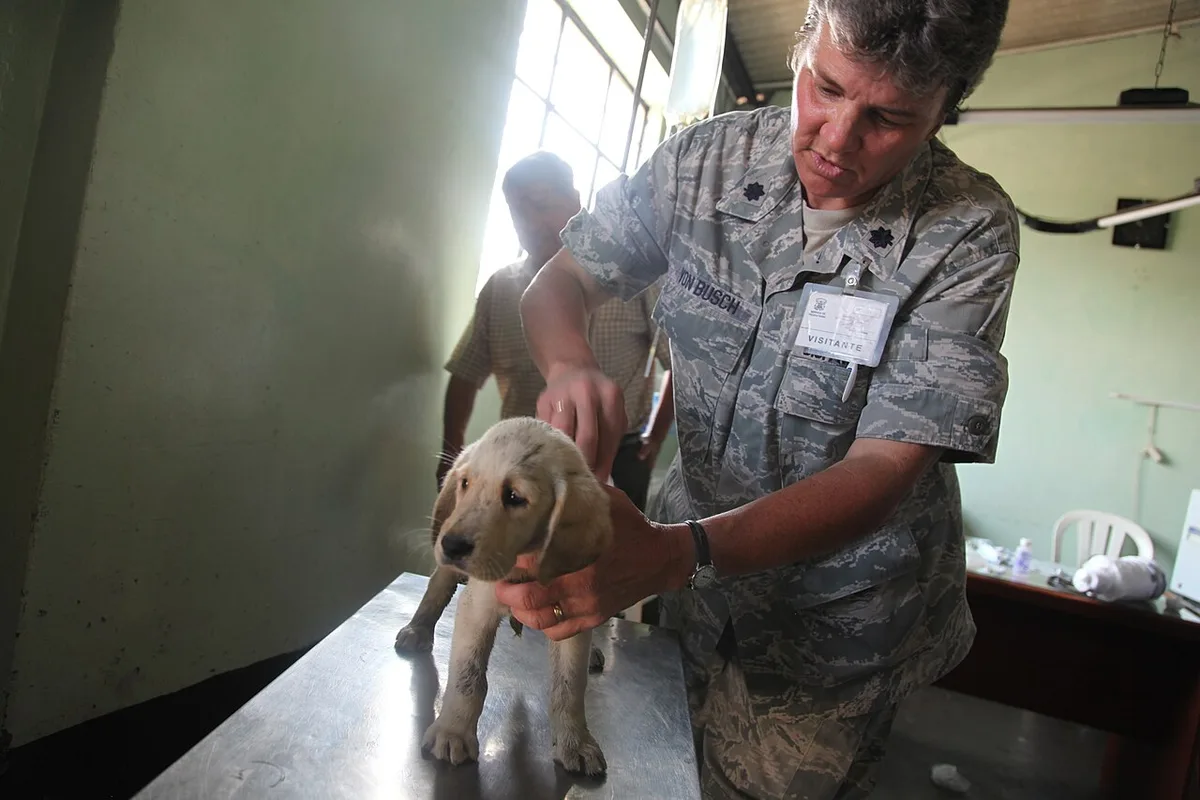
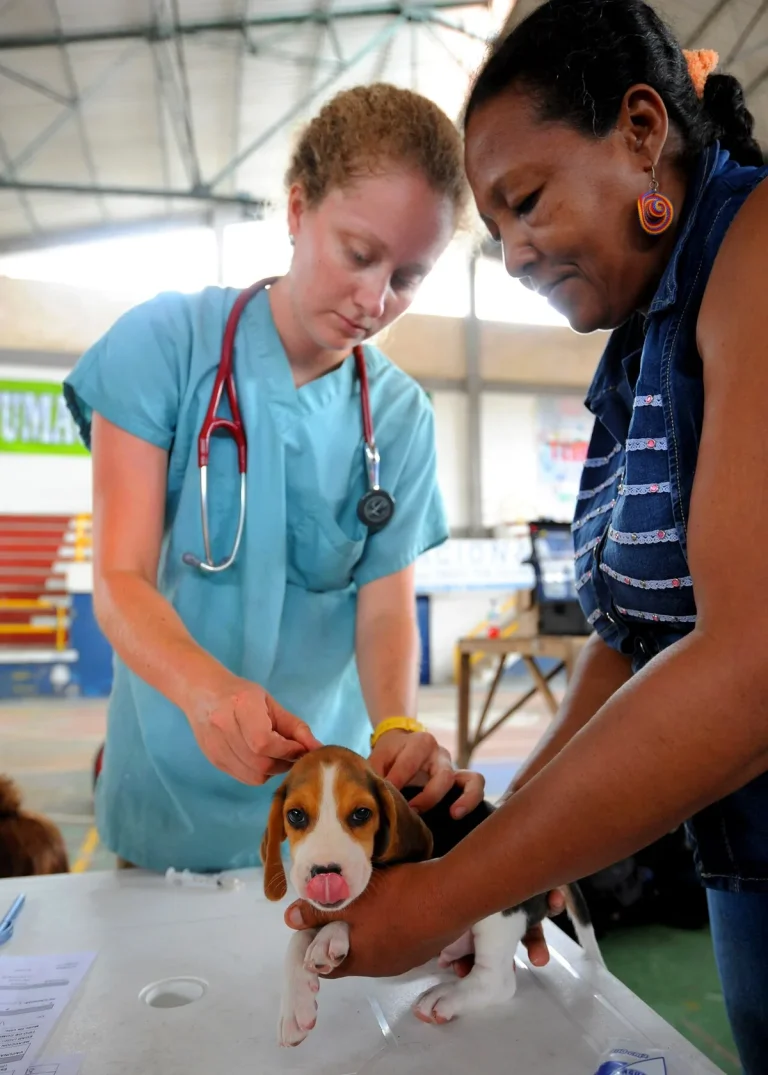
Image source: Wikimedia Commons / U.S. Department of Defense Current Photos
Your veterinarian is your most trusted partner in ensuring your puppy receives the best possible nutrition and care during their critical growth stages. They can provide tailored advice based on your puppy's individual needs and help you navigate the complexities of puppy nutrition safely.
Understanding Puppy Nutritional Needs & Feeding Guidelines
Meeting a puppy's nutritional needs is a dynamic process that changes as they grow. What’s ideal for a 4-week-old nursing pup is very different from what a 6-month-old adolescent needs. Understanding these changing requirements is fundamental to selecting the right food and feeding the correct amount to ensure optimal development.
Puppies require more calories, protein, and specific micronutrients per pound of body weight than adult dogs. For instance, a puppy’s diet must provide sufficient calcium and phosphorus to support the development of strong bones and teeth, but in carefully controlled ratios to prevent skeletal deformities. Essential fatty acids, particularly DHA, are crucial for proper brain and vision development.
Feeding guidelines, usually found on pet food packaging, serve as starting points but must be adjusted.
Factors like breed size, small breeds mature faster than large breeds, metabolism, and activity level significantly influence how much a puppy should eat. For example, large breed puppies need carefully managed calcium and energy intake to prevent overly rapid growth, which can predispose them to joint problems. Always use these guidelines in conjunction with your vet's advice and monitor your puppy's body condition to fine-tune portions.
FAQs About Puppies and Fresh Food
Is it safe to feed my puppy raw fresh food?
Feeding raw fresh food to puppies carries significant risks of bacterial contamination, which can cause severe illness due to their developing immune systems. While some owners choose this path, it requires extreme caution, impeccable hygiene, and ideally, formulation by a veterinary nutritionist. Many experts advise against raw diets for young puppies due to these risks.
Can I give my puppy table scraps as fresh food?
No, you should not feed your puppy table scraps as a primary food source. Human food, even if fresh, is rarely nutritionally balanced for puppies and can contain ingredients toxic to dogs, such as onions, garlic, or xylitol. It can also lead to picky eating habits or digestive upset.
Fresh food for puppies should be specifically formulated for them.
How do I transition my puppy to a fresh food diet?
Transitioning should be done gradually over 7, 10 days. Start by mixing about 25% of the new fresh food with 75% of the old food. Over several days, slowly increase the proportion of fresh food while decreasing the old.
Monitor your puppy for any digestive upset like loose stools or vomiting.
How much fresh food should I feed my puppy daily?
The amount of fresh food needed daily depends on the puppy’s age, breed, weight, activity level, and the specific food’s calorie density. Reputable commercial fresh food brands will provide feeding guidelines on their packaging or website based on these factors. For homemade diets, a veterinary nutritionist will provide exact portion recommendations.
Will my veterinarian approve of a fresh food diet for my puppy?
Many veterinarians will approve of a fresh food diet for puppies, provided it is complete and balanced for growth and meets AAFCO standards, or is a carefully formulated homemade diet overseen by a veterinary nutritionist. They will likely want to monitor your puppy's development closely to ensure the diet is meeting all their needs. A general consensus among veterinary professionals is to prioritize nutritional completeness and safety above all else.
When to Seek Veterinary Help Immediately
Experiencing any of the following signs in your puppy warrants an immediate call to your veterinarian. These symptoms can indicate serious health issues, including severe digestive upset from diet, a nutritional deficiency, or an infection, all of which require prompt professional medical attention. Do not delay seeking help if you notice any of these.
- Persistent Vomiting or Diarrhea: If your puppy vomits or has diarrhea for more than 24 hours, especially if it's projectile, contains blood, or is accompanied by lethargy, contact your vet.
- Extreme Lethargy or Weakness: A puppy that is unusually tired, unresponsive, or seems to lack energy may be suffering from a serious underlying problem.
- Loss of Appetite: If your puppy refuses to eat for more than a day, it’s a significant concern that needs immediate veterinary evaluation.
- Signs of Dehydration: Look for sunken eyes, dry gums, or loss of skin elasticity (if you gently pinch their skin, it doesn't snap back quickly).
- Pale Gums: Pale gums can indicate anemia or shock and require immediate veterinary care.
Your veterinarian is your most trusted partner in ensuring your puppy receives the best possible nutrition and care during their critical growth stages. They can provide tailored advice based on your puppy's individual needs and help you navigate the complexities of puppy nutrition safely.